Short answer: the warning does appear, but on most bodies it shows once after you insert a pack and then leaves you alone. Gauge accuracy depends entirely on the decoding board inside the battery, and a bar display is far more forgiving than a percentage. If a pack warns on every power-up, or the camera dies at 30 percent, that is a decoding or cell-consistency problem, not a broken camera.
It helps to separate two things. A notice means the body cannot read the pack’s identity. A fault means the pack cannot deliver current. You can keep shooting with the first. The second has to go back.
How the camera knows how much charge is left
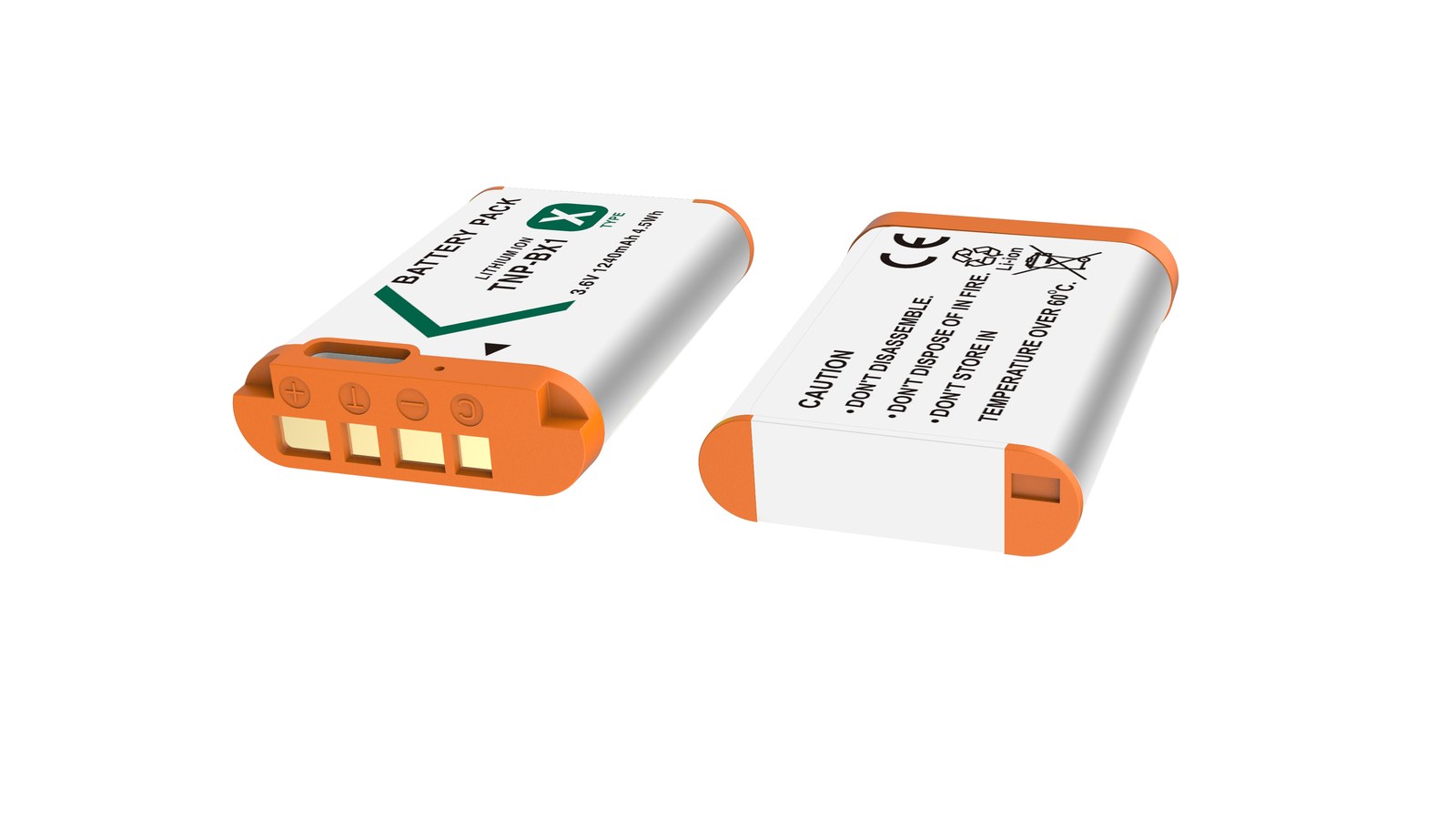
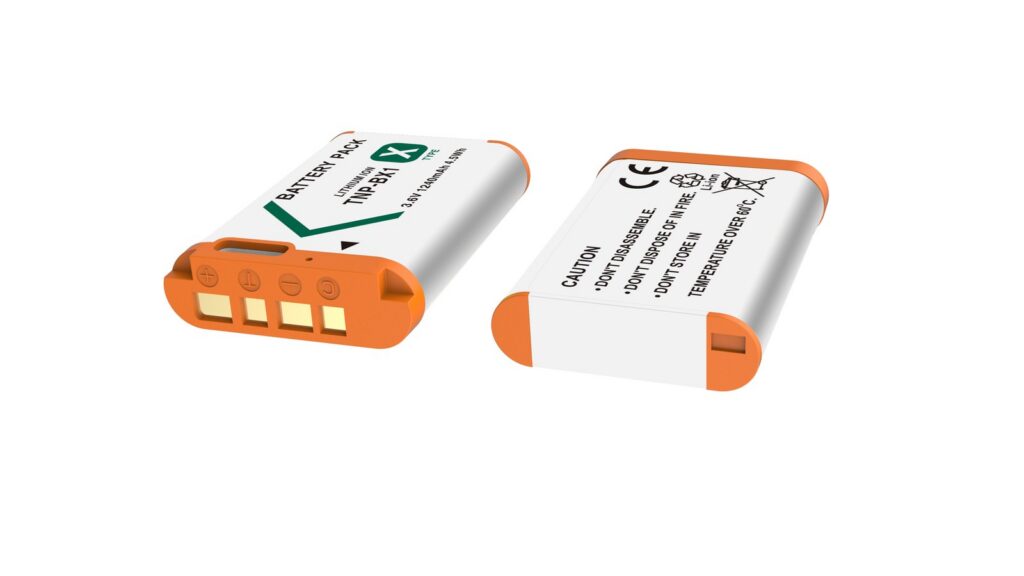
Inside an NP-BX1, next to the cell, sits a small protection board carrying identification and metering circuitry. The camera reads it over the contacts and turns the data into a gauge. An original pack answers completely. A third-party pack on a generic board may answer with values the body does not recognise, and then the message appears.
Early RX100 generations show charge as bars, usually four. Later bodies and newer models such as the ZV-1 show a percentage. The percentage looks precise, but it is a voltage lookup plus coulomb counting, and it carries error. Original packs jump around in the cold or during long recordings too. Not every wobble from a third-party pack is a defect.
The decoding board’s job is to answer the body’s questions: present voltage, remaining capacity, temperature, cycle count. A good board answers consistently, so the camera can draw a smooth curve. A poor one either fails to answer or contradicts itself between reads.
What bad readings look like
- 100 percent on insert, 60 percent after a dozen frames. Usually voltage recovery, and it climbs back after a rest.
- A blank gauge or dashes. Identification failed, so the body has no number and falls back to a rough time estimate.
- Sudden shutdown at 20 to 30 percent. High cell resistance lets voltage sag under load, and the protection board cuts early.
- The same pack behaves on one body and not another. Oxidised contacts, on the pack or in the camera.
- Very fast drop outdoors in winter. Rising internal resistance in the cold is physics, not decoding.
The first three point at the pack, the last two at the body or the environment. A second camera rules out half of it.
Judging whether a third-party pack decodes well
No instruments needed. Watch the points below over a day or two. The left column is what to look at, the middle is normal, the right is a warning sign.
| Check | Good decoding | Poor decoding |
|---|---|---|
| Power-up notice | None, or once on first insert | Every time the camera starts |
| Gauge curve | Falls steadily in proportion to shooting time | Sits at 100 percent, then plunges |
| Low warning | Appears near 10 percent, with reserve left | Shutdown at around 30 percent |
| Continuous recording | No interruption mid-clip | Dies and restarts after a few frames |
| Self-discharge at rest | A few points a week | Half the charge in a week |
This is a way of thinking, not a pass mark. A pack that matches most of the middle column will not cause trouble in daily use.
Fixing a pack, and choosing one
- Clean the contacts. A pencil eraser or a dry cotton bud on both the pack and the camera body. Oxidation is the most common cause.
- Try another body. That rules out the camera’s contacts or firmware.
- Run two full cycles. A new pack’s metering curve needs one complete cycle before it lines up.
- Return it if the problem persists. Shutdown at 30 percent within the first week is a quality issue, not a characteristic.
Do not open the pack. The protection board is sealed inside, and taking it apart destroys the insulation without fixing the metering, while adding a short-circuit risk.
Check whether the numbers are stated properly. A listing that gives one capacity figure and never separates rated from typical is usually playing with the wording. This site lists 1090mAh typical, 1060mAh rated, 3.7V and 4.04Wh, with the details on the NP-BX1 compatible battery page.
Accept one premise as well: 1090mAh is below Sony’s roughly 1240mAh nominal figure for the original, and that is where the price difference comes from. Buying third-party is about paying ¥24.57 a piece so you can carry several, not about outlasting the original. Other packages are listed under Sony NP-BX1 batteries.
FAQ
Can I keep using a pack after the non-genuine notice?
Yes. The notice says identification did not pass, not that the pack cannot supply power. Dismiss it and shoot, while watching whether the gauge behaves consistently.
Will a third-party pack damage the camera?
The risk in normal use is low. The body handles voltage and temperature protection on its side, and the pack has its own board. Avoid a pack with a deformed shell, corroded contacts, or one that gets hot while charging.
Is fast drain on the first use normal?
It is common. The new pack’s curve has not aligned with the body yet, so the first readings are optimistic. After one or two full cycles the numbers settle.
How long can I shoot at 1 percent?
It depends on the body and what you are shooting. The gauge falls quickly at the bottom, so change packs at 10 percent rather than trusting the last point to finish a clip.