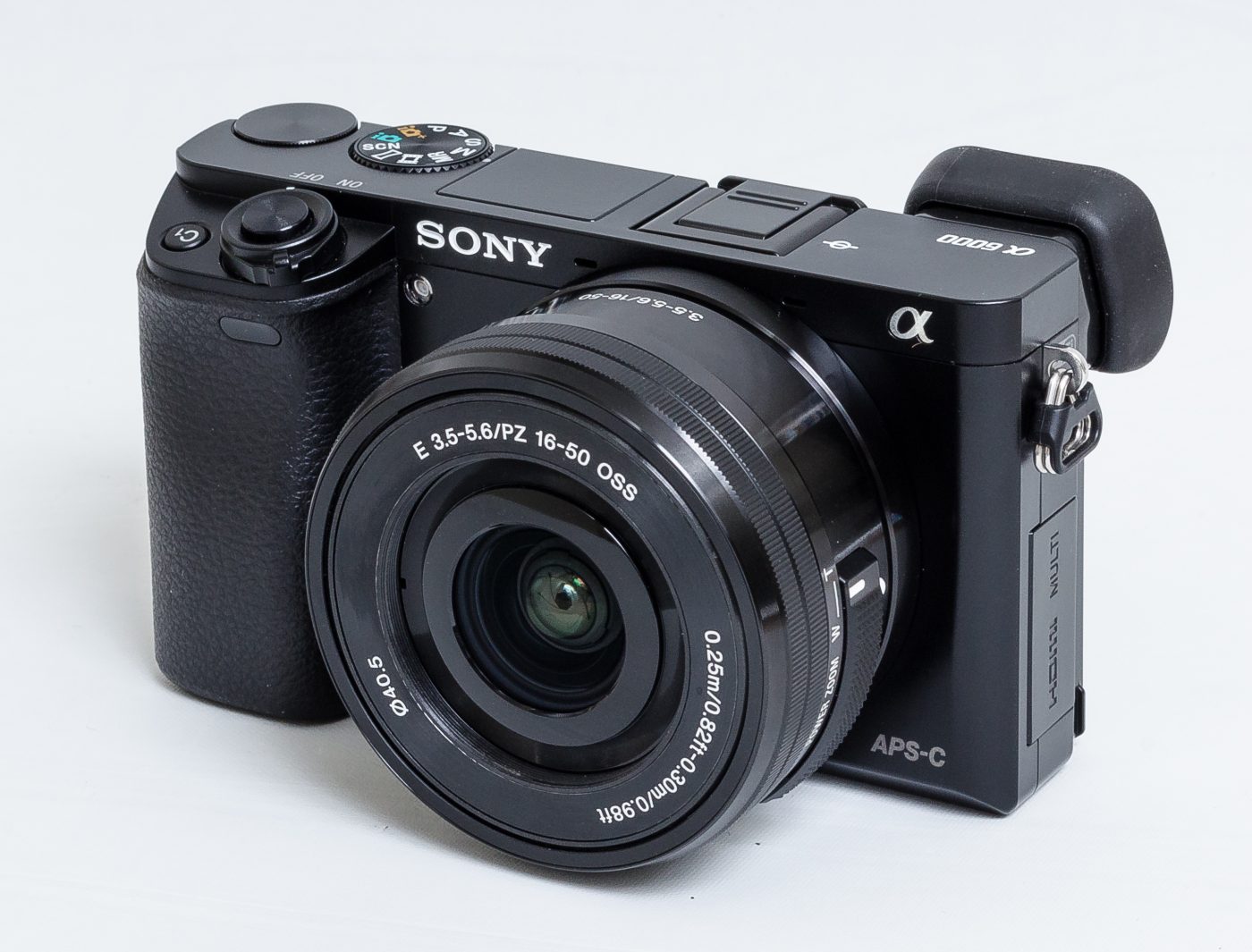
Short answer: the A6000 (ILCE-6000), A6100 (ILCE-6100) and A6300 (ILCE-6300) all take the NP-FW50 and all appear on Sony’s official compatibility list. Third-party equipment references quote CIPA rated stills counts of roughly 360 / 420 / 400 frames, but those are standardised manufacturer figures, not a promise for real shooting. To work out how many packs to carry, divide your expected frames by the rated count, round up, and leave headroom for video, cold and a live screen. At 8.14Wh our compatible cell is small by current standards, so quantity matters more than hunting for a bigger one.
The three bodies and their rated figures
The table pairs each model code with its official-list status and the manufacturer’s rated stills count. The CIPA figures are collated by third-party equipment references under standardised test conditions; we have not measured them and do not present them as anyone’s real frame count.
| Body | Code | On Sony’s NP-FW50 list | CIPA rated stills (not a field test) |
|---|---|---|---|
| A6000 | ILCE-6000 | Yes | Approx. 360 frames |
| A6100 | ILCE-6100 / 6100A | Yes | Approx. 420 frames |
| A6300 | ILCE-6300 | Yes | Approx. 400 frames |
A few dozen frames between models is not worth optimising for. What actually pulls the count down is a constantly live screen, frequent playback, flash, wireless transfer, cold weather and the share of video. One body, one cell, but a day of stills and a day of 4K recording are not comparable. Treat the rating as a relative scale.
Turning a rating into a packing plan
The arithmetic is simple: expected frames for the day ÷ rated frames for that body, round up, then add headroom for the shooting style. The example below uses the A6000’s 360 frames and is illustrative, not a promise.
| Expected frames | Sum (at 360 per cell) | Theoretical cells | Practical plan |
|---|---|---|---|
| Under 200, stills only | 200 ÷ 360 ≈ 0.6 | 1 | One cell, refill overnight |
| Around 600, travel stills | 600 ÷ 360 ≈ 1.7 | 2 | Two rotating, a little headroom |
| Around 900, all-day outdoor | 900 ÷ 360 ≈ 2.5 | 3 | Three, refilled in parallel overnight |
| Video-led day | Stills rating does not apply | Not by frames | Three or more, or external power |
Do not skip the rounding-up step: 1.7 means two cells, but two leaves no margin at all if it gets cold or you review a lot. For a full day out, plan on three. Our NP-FW50 compatible cell is quoted at 1100mAh / 7.4V / 8.14Wh; the TNP-FW50 USB-C version has the same capacity and only changes how you refill, not how long a cell lasts.
What uses this cell fastest
- A live screen and constant playback: framing and review both draw from the body, and repeated review keeps consuming a modest 8.14Wh.
- Continuous video: the stills rating comes from a standard test sequence and does not convert directly into recording minutes. Do not use the table above for video.
- Cold weather: usable capacity falls outdoors in winter. Keeping spares close to your body and fitting them only when needed does more than buying another pack.
- Wireless transfer and flash: sending images to a phone and firing a strobe both add draw; count them into the margin when used heavily.
None of this is folklore — each item is extra power consumption. Turning off automatic review and reducing wake cycles usually does more than agonising over 1020mAh versus 1100mAh.
Refilling three or more
Spare cells earn their keep by rotating through the day; the difficulty is refilling them all at night. Cells with a USB-C port can go straight into a power bank or a multi-port charger without matching docks, while plain cells use a dock or in-camera USB where the body supports it. The early A6000 generation mostly cannot charge a cell over the body’s USB port, which is where the direct-charge port earns its keep.
For work that cannot be interrupted, such as livestreaming or time-lapse, swapping cells is the wrong mechanism; use a DC solution like the DR-FW50 external power adapter. Body-by-body and capacity articles are grouped in the NP-FW50 category.
FAQ
How many frames does one NP-FW50 give the A6000?
Third-party references quote a CIPA rating near 360 frames under standardised test conditions, not a field result. A live screen, playback, flash, cold and video all bring the real number down.
Do the A6100 and A6300 use the same battery as the A6000?
Yes. The ILCE-6100, ILCE-6300 and ILCE-6000 are all on Sony’s NP-FW50 compatibility list and take the same format.
How many more frames does 1100mAh buy over the original 1020mAh?
There is no reliable fixed conversion. The voltages differ, so energy is 8.14Wh versus 7.3Wh; usage affects the frame count far more. Do not expect a percentage gain.
How many cells for 600 frames a day?
At the A6000’s 360-frame rating, 600 ÷ 360 ≈ 1.7, so two when rounded up. For a full day outdoors, with cold or video involved, plan on three.