Posted on — Leave a comment

Your First Third-Party NP-FZ100: A Beginner’s Guide to Buying Well

Buying your first third-party NP-FZ100 is straightforward if you work through five steps: confirm your body actually takes an NP-FZ100, read the spec label and discount any inflated claims, check the protection and certification story, confirm the warranty and returns channel, then run a three-step test when it arrives. The NP-FZ100 is rated 2600mAh / 7.2V / around 19.24Wh, and that figure is your baseline for judging whether a label is honest.

YO NP-FZ100 camera battery render
Product render of the YO NP-FZ100 compatible battery: front label, rear LED charge indicator and USB-C port.

Third-party cells are a legitimate alternative. There is no need to treat them as magic or to avoid them. Buy one the way you would buy any consumable with a spec, a price and a service life.

Step 1: confirm which battery your camera takes

This is the most common beginner mistake and accounts for a large share of returns.

  • NP-FZ100 bodies: A7 III, A7R III, A7R IV, A7R V, A7 IV, A7S III, A9, A9 II, A9 III, A1, A6600, A6700, A7C, A7C II, A7CR, FX3, FX30, ZV-E1.
  • NP-FW50 bodies: A6000, A6300, A6400, A6500, A7, A7 II, A7R II, A7S II.
  • NP-BX1 bodies: the RX100 series.

Worth repeating: the A6400 takes an NP-FW50, not an NP-FZ100. The two look similar and do not swap. Check the marking inside the battery compartment door before ordering, or cross-check against the Sony mirrorless battery reference table.

Step 2: is the spec label complete?

What should be printed What it tells you If it is missing
Model (NP-FZ100 or “for NP-FZ100”) Fitment claim Look elsewhere
Rated capacity (mAh) and energy (Wh) Capacity and total energy Specs are not transparent
Rated voltage, 7.2V Electrical spec Must check before buying
Maker or responsible party Someone to claim against Recourse will be hard
Batch or production date Stock freshness Usable as a negotiating point

Our own NP-FZ100 is labeled 2600mAh / 7.2V / around 19.24Wh, and the NP-FZ100 (USB-C) is labeled 2600mAh / 7.2V / around 18.72Wh. Both fit the same bodies; the difference is capacity. What that difference means in practice is covered in 2600mAh versus 2600mAh.

Step 3: recognize the overblown claims

Treat these with suspicion:

  • “Double the capacity of the original”: energy density cannot double in the same volume at the same voltage. Close to, or modestly above, the original rating is the believable range.
  • “Completely safe, will never swell”: every lithium cell ages and can fail. Responsible wording names checkable things like overcharge and over-discharge protection.
  • “Same cells as the original”: unverifiable, and a compatible product should not be described using the word “original.”
  • “No chip needed, never throws an error”: recognition and fuel-gauging depend on how body and cell communicate. Nobody can promise zero messages.
  • “Lowest price online”: a slogan, not a specification.

A practical way to test capacity claims yourself is in how to spot inflated capacity ratings; a broader brand checklist is in our six criteria for choosing a third-party NP-FZ100.

Does the listing explain its safety design?

The flip side of spotting hype is checking whether the seller bothered to state the basics. A reasonable compatible cell usually spells out the following:

  • Protection board: the pack should have overcharge, over-discharge and overcurrent protection.
  • Shell quality: even seams, no burrs, no chemical smell, flat unmarked contacts.
  • Packaging and warnings: a fitment list, handling precautions and a recycling symbol are normal.
  • Never open or modify it: any cutting into the shell or soldering adds risk.

Safety questions are organized in our guide to whether third-party camera batteries are safe. One line to keep: a swollen cell stops being used immediately — no further charging, no puncturing, no burning, just a recycling point.

Step 4: read the warranty and returns terms

  • How long, and from when: dispatch date or delivery date.
  • What happens on a fault: replacement or repair, and who pays shipping.
  • Can you return after inspecting: a floor for obvious problems on arrival.
  • Is there a real contact: if you cannot reach the seller, do not buy.

Our service and returns terms are on the NP-FZ100 warranty page.

Step 5: three checks on arrival

Look

No swelling or deformation, no oxidized contacts, legible markings, and it should drop into the compartment smoothly without forcing.

Charge

Run one full charge on the supplied or a known-good charger and see whether the time is in line with other cells of the same rating. Unplug once the indicator turns green. Slightly warm is normal; hot to the touch means stop and contact the seller.

Shoot

Fit it, confirm the camera powers up and fires, and check that the gauge behaves. If you get a “cannot use this battery” message, clean the contacts and try again; if it keeps coming back, work through our unrecognized battery fix.

Some Sony bodies show a message that remaining charge may not display accurately with a non-original cell. That is normal and shooting continues. Keeping that separate from “cannot use” saves a lot of unnecessary worry.

FAQ

How many should I buy the first time?

Two, or the two-cell kit with a charger. One cell often is not enough once a day gets busy, and two let you compare behavior within a batch as well as rotate them.

Will a third-party cell damage the camera?

A properly built cell that matches the rated voltage and includes protection will not. What to avoid are unbranded products with no stated spec and any cell that has swollen.

Does the first charge need 12 hours?

No. Lithium cells have no memory effect, so top up whenever and unplug when the charger indicates full. Sitting at 100% for long stretches actually speeds up aging.

Sony says non-original batteries can cause problems. Is it still OK?

Recommending its own cells is a standard manufacturer position, and third-party cells remain a legitimate alternative. Pick a product with published specs and a real warranty, run the checks above, and the risk stays reasonable.

Only need a spare? The NP-FZ100 2600mAh comes on its own, with a charger, or as a two-battery kit. Both versions hold 2600mAh; the USB-C one costs slightly more and saves you carrying a dock.
Posted on — Leave a comment

Multi-Bay Chargers: An Efficient Setup for Four NP-FZ100 Packs a Day

For four packs a day, two bays are enough for most people and four bays suit high-intensity or team work. The deciding factor is not the number of bays but whether the total charging time fits into the hours you are not shooting. With a clear six-to-eight-hour overnight window, two bays in two batches is fine. With only two or three hours before bed, or if you need to top up during the day, four bays earn their place. One caveat that catches people out: a multi-bay charger has a finite total output, so per-bay current usually drops when every slot is filled, and advertised fill times should be read with that in mind.

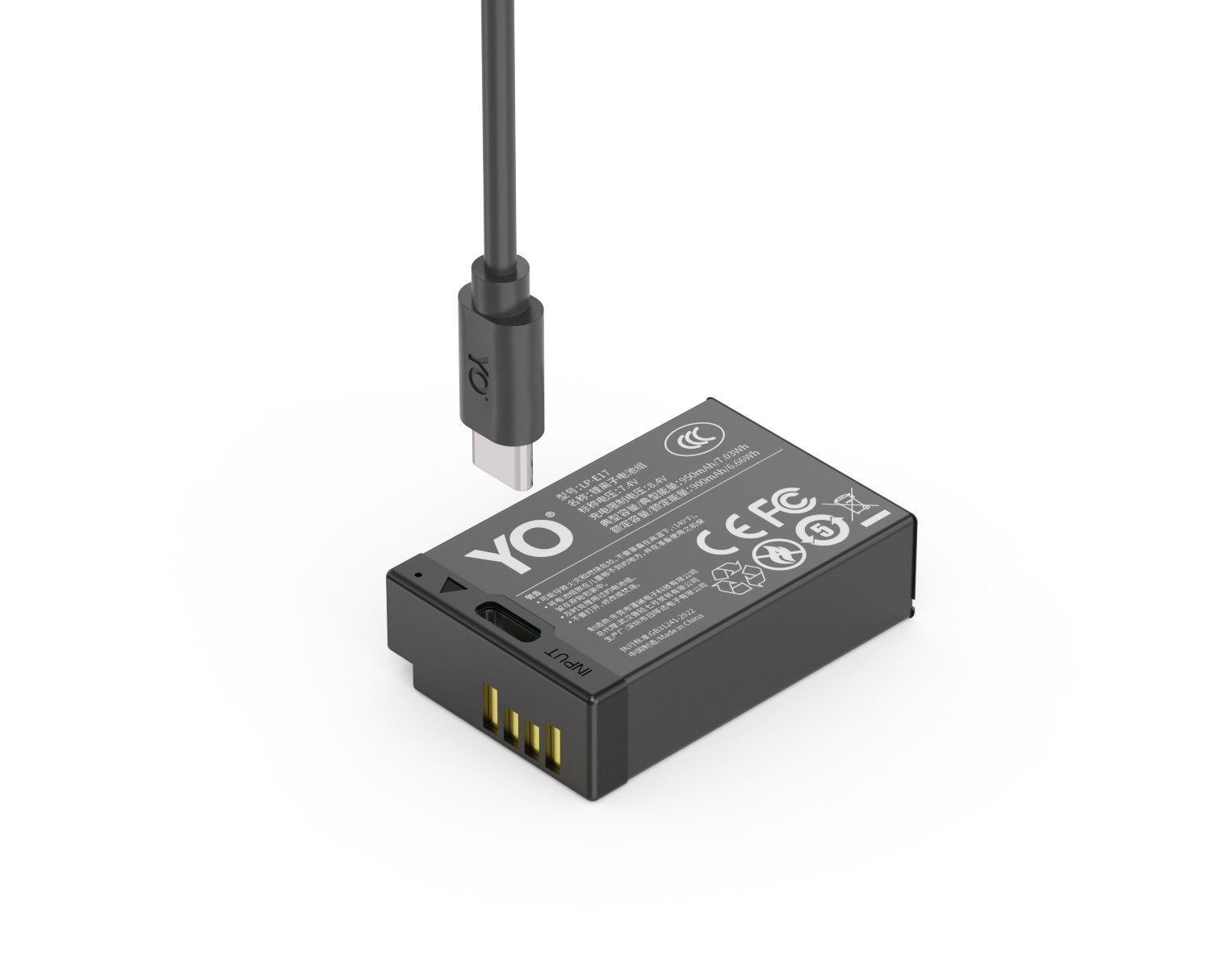
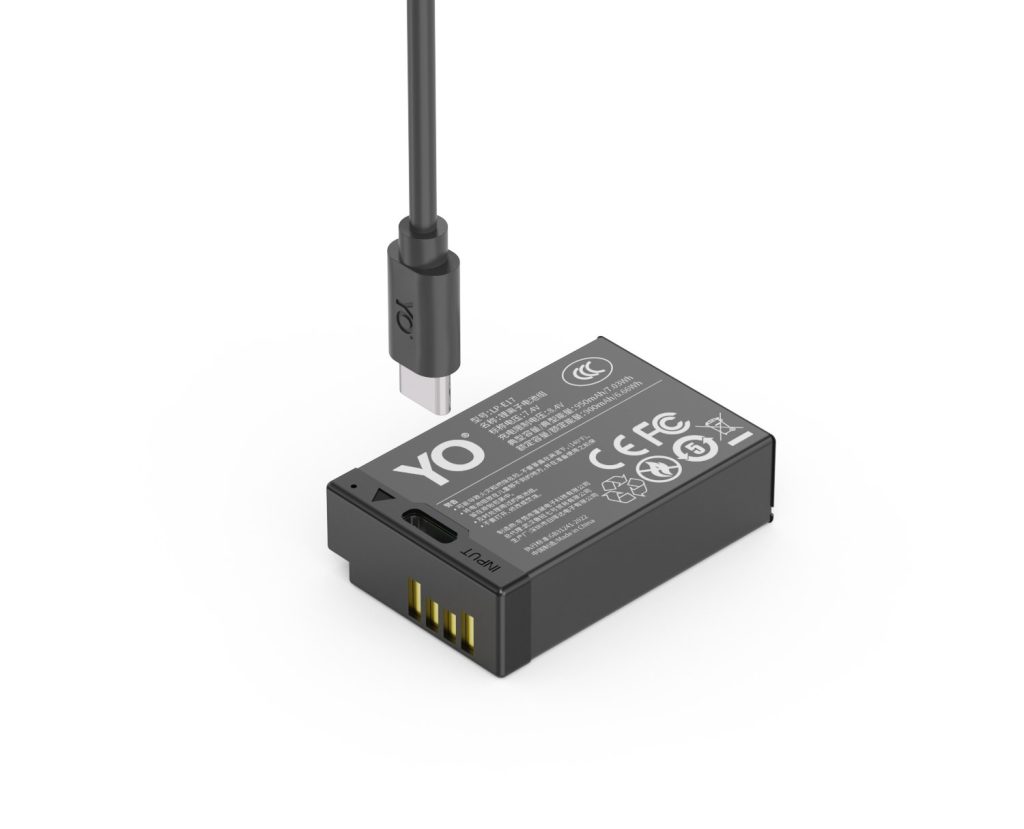
YO NP-FZ100 camera battery render
Product render of the YO NP-FZ100 compatible battery: front label, rear LED charge indicator and USB-C port.

First, the Time Arithmetic

Charging window Bays to use Why
A full night, 6–8 hours Two is enough Two batches, one swap before bed
2–3 hours before bed Four is safer Load it once and avoid a midnight swap
Topping up during the day Two bays plus portable power Pair with a power bank or car adapter
Team with several bodies Four bays, or two dual units Two units spread the risk; one failure does not stop everything

A pack rated around 2600mAh / 19.24Wh normally takes several hours on a routine-current charger, depending on the charger’s output and how much charge is left. Read the stated output figures rather than the marketing claim about fill time.

Two Bays: The Sensible Default

  • Strengths: small, light, inexpensive, easy to travel with, and per-bay current usually stays reasonably healthy when loaded.
  • Suits: two to four packs a day with a proper overnight window.
  • How to run it: two packs before bed, swap to the other two in the morning — or charge the two you used during the day first, then swap at night.
  • Care: multi-bay units run warmer when loaded. Keep them on a ventilated surface.

Four Bays: When They Are Worth It

  • Weddings, commercial work and events where you burn four-plus packs and get back late.
  • Studios and rental houses turning packs over daily.
  • Teams sharing one charger, where bays are literally throughput.
  • Anyone who wants charging to be a single before-bed action with no 2 a.m. swap.

Total output is the number that matters on a four-bay unit. Two four-bay chargers can behave very differently: a high-output model barely slows when full, while a low-output one can end up slower than a dual charger. Look for the per-bay output figure when all slots are occupied.

A Simple Routine for Four Packs a Day

  • First thing after a shoot: take every used pack out and wipe the terminals. Sweat and dust raise the odds of poor contact.
  • Set priority: the two packs you need first tomorrow go on the charger first.
  • Load and check the lights: confirm every bay is actually charging — steady red is normal, and a flashing red is dealt with in reading the indicator lights.
  • Pull packs once done: do not leave them sitting on a live charger overnight if you are not using them until the afternoon.
  • Store properly: fit terminal covers, put packs in a case by number, and keep the rotation order obvious for the next morning; see terminal covers and storage cases.

Four Safety Rules for Multi-Bay Charging

  • Charge on a hard, flat, ventilated surface. Not carpet, not a bed, not inside a camera bag.
  • Leave space between bays. Do not stack chargers or cover them with anything.
  • Packs at different states of health behave differently — a worn one runs hotter, so check for temperature differences between packs.
  • If the charger shell is hot, smells or buzzes, cut power and stop using it.

How Many Packs Should You Own?

If you are charging four a day, you already own at least four. A good rule is what a day consumes plus one: if you get through three, carry four, so there is slack when something goes wrong. For weddings and travel, plan against how many batteries to carry when travelling and add a pack for the body you did not expect to use.

FAQ

Is a loaded four-bay much slower than a two-bay?

It depends on total output. A unit with limited output drops per-bay current noticeably when full, so charging four at once can take longer overall. Check the per-bay figure with all slots occupied.

Can I mix capacities in one charger?

Both versions hold 2600mAh. The only difference is charging: the standard pack needs a dock, while the USB-C version runs off any phone charger or power bank.

Can I fly with a multi-bay charger?

The charger itself is normally unrestricted. The packs are the regulated part: under TSA and FAA rules, spares must travel in carry-on, never in checked bags, with terminals protected against short circuits. At roughly 16.4Wh these packs sit well under the 100Wh threshold, so no airline approval is needed, but confirm details with your carrier.

Is a model with a display worth it?

A display showing voltage, current or percentage helps if you need to track progress closely. Most people get everything they need from the indicator lights.

Build your kit: the NP-FZ100 is 2600mAh / 7.4V / 19.24Wh. Battery only, battery plus charger, or two batteries plus charger — pick under Bundle. If you would rather leave the dock at home, the same-capacity USB-C version (2600mAh / 7.2V / 18.72Wh) charges from any phone charger. Bulk orders: wholesale enquiry.

Posted on — Leave a comment

LP-E17 T Series vs the Standard Version: What to Pack

YO LP-E17 相机电池

Short answer: the cells in the T series and the standard version are close, and what actually separates them is how they charge. The T series puts a Type-C port on the battery itself, so one cable and any 5V source will do. The standard version depends on a dock charger, but you can fill a whole row at once and see every status at a glance. For light travel and a single spare, take the T series; for rotating several packs at a fixed location, the standard version is handier. If you travel and also shoot paid work, running both is often better value than picking one.

YO LP-E17 camera battery render
Product render of the YO LP-E17 compatible battery: front label, rear LED charge indicator and USB-C port.

Below is a point-by-point comparison, focused on what you have to carry, since that usually shapes the experience more than any specification.

Point by point: where the difference actually is

Item LP-E17 T series (direct charge) LP-E17 standard
Charging method Type-C on the battery body, 5V direct Requires a dock; the original is the LC-E17
Accessories you must carry One USB-C cable, shareable with your phone Dock plus power cord, usually proprietary
Full charge time About 2-4 hours, depending on the charger About 2-4 hours, depending on dock input
Charging several at once Needs multiple power ports or banks A multi-bay dock fills a whole row
Weight per pack Slightly above the standard version at the same capacity, but marginal Slightly lighter at the same capacity
Best for Travel, location work, top-ups Home, studio, batch rotation
Price feel Usually a little above the standard version at the same capacity More economical at the same capacity

The weight and price gaps are written as slight because the exact difference moves with capacity tier and batch, and hard numbers would mislead. The two rows worth your attention are the first two: what you have to bring is either one cable or a dock plus a cable.

The packing difference is item count, not weight

Take a two-day, one-night light trip. The two packing lists differ in a very visible way.

  1. Standard setup: one body, two packs, one dock, one dock power cord, one power bank for the phone. Five items, and the dock and cord are only used in the evening.
  2. T series setup: one body, two packs, one USB-C cable, one power bank. Four items; the cable doubles for the phone, and the bank serves the phone by day and the battery at night.
  3. Mixed setup: one body, one T series pack for emergency direct charging, two standard packs, one dock. The most items but the most coverage, suited to trips that include important shooting.

On weight alone, a dock is usually a few tens of grams and with its cord around a hundred, hardly a burden. The real gain is the certainty that comes from fewer items: one less thing to remember, one less connector standard to match, less chance of leaving something behind. That is most obvious when you are carrying only a small bag.

Choosing capacity: bigger is not automatically better

Both versions come in tiers, and the T series likewise offers several capacities. For light travel, one high-capacity pack plus one mid-capacity pack usually makes more sense than two high-capacity ones: similar total weight, but you can put the heavy one in the camera and the light one in a pocket. For how the tiers compare in practice, the LP-E17 capacity and compatibility guide has the full table.

Body construction matters too. Small bodies like the R50 and R100 are compact, and a thicker pack barely shifts the overall balance, but bursts and long recordings concentrate heat more, so higher capacity does not mean you can extend continuous shooting indefinitely.

What to avoid is buying the highest capacity for the sake of direct charging. Direct charging solves convenience of replenishment; capacity solves single-session runtime. They are different problems. If you shoot two or three hundred frames a day and can charge at the hotel, a mid capacity with direct charging is entirely sufficient; if you shoot a thousand or more, capacity deserves priority over the connector, because carrying an extra pack always saves more time than charging one more time.

When mixing makes sense

The first case is a trip with important shooting folded in: use the T series for top-ups during the day, charge the standard packs on the dock at the hotel overnight, and set off the next morning without the power bank. The second is anyone who already owns a dock and several standard packs: add one T series pack for emergencies rather than replacing the whole kit.

YO labels capacity the same way across both lines, so mixing does not lead to miscounting because of different naming. To look at the direct-charge specifications, see the T series category; to compare capacity tiers, see the 950mAh category.

FAQ

How much heavier is the T series than the standard version?

At the same capacity it is usually slightly heavier because of the Type-C port and its circuitry, but the difference is negligible. What you feel depends far more on the capacity tier than on whether it direct-charges.

Can a direct-charge pack still be charged on a dock?

Usually yes, since the contacts match. A dock works as a backup method; you simply give up the main advantage of carrying one less accessory.

With only one battery, which should I get?

If you are often out and about with a power bank nearby, take the T series. If you mostly shoot at home or in a studio, the standard version plus a dock is sufficient and more economical.

Can the two types be rotated in the same body?

Yes. As long as both are LP-E17, the dimensions and contacts match and alternating them does not affect the camera. The gauge may read slightly differently depending on pack age, which is normal.

Posted on — Leave a comment

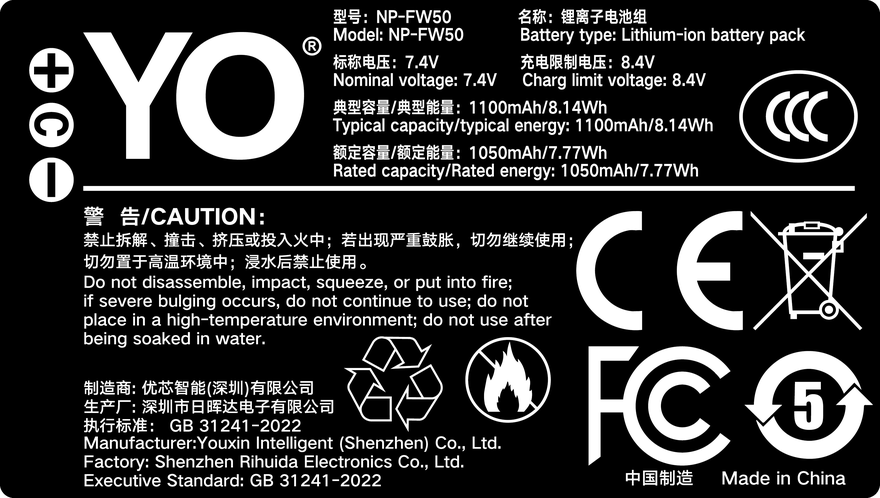
Do Third-Party NP-FW50 Batteries Harm the Camera? Decoder Chips and Firmware

Short answer: a correctly specified third-party NP-FW50 with a decoder chip will not damage a body simply for not being genuine — the camera draws DC power within its designed range and a higher capacity rating does not “force” more into it. What does go wrong is the communication layer: the body needs to read pack data to display remaining charge, and without that exchange it may reject the cell, warn, or show a jumping readout. Poor cells and weak protection circuits are a separate risk, about build quality rather than branding. Splitting “will it harm the camera” into power delivery and data exchange makes the question answerable.

What InfoLITHIUM exchanges

Sony describes the InfoLITHIUM W series as a pack that exchanges consumption data with compatible bodies and chargers, allowing a more accurate remaining-charge indication, commonly a percentage or minutes left instead of a three-bar icon. The battery is therefore not only a power source; it carries an identity and a data channel the body reads.

A compatible cell needs a decoder chip to reproduce that behaviour. Our NP-FW50 compatible cell and the TNP-FW50 USB-C version both state a built-in decoder chip for normal communication and a true percentage readout. Without that layer, a cell can often still deliver power, but the body may have no idea how much is left.

Layer What the body does What the cell must supply Symptom when it fails
Power Draws DC within its design range Correct voltage, polarity, shape, protection circuit Won’t power on, sudden shutdown
Communication Reads pack data for the charge readout Decoder chip and compatible exchange Not recognised, warning, jumping percentage
Protection Relies on the pack’s internal circuitry Over-charge, over-discharge, over-current, short, thermal Heat, swelling, charging faults

Where the “harm” worry comes from

The usual fear is that a larger capacity rating will burn something out. A battery does not push energy into the body; the body draws what its own consumption requires. If the voltage sits in the designed range, capacity only decides how long that draw can continue. Our cell is quoted at 1100mAh / 7.4V / 8.14Wh, Sony’s original at 1020mAh / 7.2V / 7.3Wh — the same format family, differing in stored energy rather than in how power is delivered.

Three things do deserve attention: the quality of the cells and the protection board, since counterfeit packs may cut corners on over-current and thermal protection; usage habits such as long-term storage at full charge in heat or deep discharge, which apply to any lithium-ion cell; and camera firmware. Public references repeatedly note that a firmware update can change how a body recognises compatible packs. Nobody can promise behaviour across every body and every firmware version.

So the useful questions are not “will it harm the camera” but “is there a decoder chip, is there a protection circuit, and does the seller state the compatible models”. Those three predict real-world behaviour better than a capacity number.

Diagnosis order for recognition problems

If the body warns about the battery, shows no charge level, or the percentage jumps around, work through this order rather than repeatedly swapping packs at random:

  1. Confirm the body is an NP-FW50 model. Rule out the wrong format first — the α7 III and α6600 take NP-FZ100.
  2. Wipe the contacts on both the pack and the compartment with a clean dry cloth. Oxidation or skin oils can look exactly like a rejected battery.
  3. Charge the cell fully and refit it. A deeply discharged or long-stored pack often misreports on first contact.
  4. Cross-check with a second cell. If both misbehave, look to the body or its firmware; if only one does, look to that pack.
  5. Recall any recent firmware update. A new warning after an upgrade should be checked against the seller’s decoder solution, not answered with more reseating.
Symptom Likely cause First action
“Incompatible battery” message Decoder exchange rejected / wrong format Verify the model code, then the firmware version
Powers on, no percentage Missing or incomplete data exchange Clean contacts, recharge fully, retry
Percentage jumps sharply Under-voltage, ageing or uncalibrated readout One full cycle, then consider replacement
Sudden shutdown Poor contact, aged cell or cold Clean contacts and warm the pack before retrying

Choosing with fewer surprises

Prefer products that explicitly state a decoder chip, protection circuitry and a list of compatible bodies, and keep the order record in case a firmware question comes up. Do not chase the largest capacity figure: at 8.14Wh this is a small cell, and a second pack you rotate gives more certainty than a few extra rated mAh. For continuous work such as livestreaming or time-lapse, swapping cells is the wrong tool anyway — a DC supply such as the DR-FW50 external power adapter fits that job better.

One last rule: do not share chargers across different battery formats, and never keep using a cell that is swollen, smells unusual or runs abnormally hot. Retire it. That is general lithium-ion safety practice, unrelated to whether the pack is genuine.

FAQ

Will a third-party NP-FW50 damage my camera?

Not simply for being third-party. With the correct specification and protection circuitry, the body draws only what it needs and capacity decides duration. The real risks are poor cells, weak protection and buying the wrong format.

Why do some cells power the camera but show no percentage?

InfoLITHIUM’s charge readout depends on data exchange between pack and body. Without a decoder chip, or if the exchange is rejected, power may still flow but the body cannot know the remaining charge.

Is it normal to lose recognition after a firmware update?

It is a known communication-layer possibility, not a sign that the battery damaged anything. Verify the model and contacts first, then ask the seller whether the decoder solution covers that firmware version.

Is the USB-C version more likely to be rejected?

The charging port and the body communication are separate circuits. Our TNP-FW50 also carries a decoder chip, so recognition works like any other compatible cell; only the refill method differs.

Posted on — Leave a comment

Can You Fly with NP-FZ100 Batteries? TSA and FAA Rules

The direct answer: yes, you can fly with them — and they have to come in the cabin with you, not in checked bags. The NP-FZ100 is rated 7.2V / 2280mAh for roughly 16.4Wh, comfortably under the 100Wh threshold. Under TSA and FAA guidance, loose spares belong in carry-on only; putting them in checked luggage is prohibited. A battery installed in your camera travels with the camera. Spare terminals need short-circuit protection — original packaging, a terminal cover, or insulating tape — and some airlines impose a per-person limit on how many you may bring. Carriers apply the rules with some variation, so confirm details with the airline before you fly. Below: the rules, how to pack, and how many to carry.

YO NP-FZ100 camera battery render
Product render of the YO NP-FZ100 compatible battery: front label, rear LED charge indicator and USB-C port.

The number that matters: 16.4Wh

Aviation rules classify lithium batteries by watt-hours (Wh), not milliamp-hours:

  • Under 100Wh: spares allowed in carry-on. Airlines commonly cap the count at around twenty per person.
  • 100–160Wh: airline approval required in advance, with a lower per-person allowance. Typical of large camcorder bricks.
  • Above 160Wh: prohibited.

At roughly 19.24Wh, the NP-FZ100 falls squarely in the most relaxed bracket. The math is Wh = capacity (Ah) × voltage (V): 2.6Ah × 7.4V ≈ 19.24Wh. The 2600mAh variant works out to about 18.72Wh, still nowhere near 100Wh. How to read those figures is covered in what mAh, Wh, and V mean.

Three non-negotiables

1. Spares go in carry-on, not in the hold

An installed battery stays with the camera; every loose spare goes in your cabin bag. The reasoning is straightforward: if a cell goes into thermal runaway in the cargo hold, nobody can reach it quickly. Security finding loose lithium cells in a checked bag will typically pull the bag for inspection.

2. Protect the terminals

Metal contacts touching keys, coins, or another battery can short. Three accepted methods:

  • Keep them in the original retail packaging — easiest and most common;
  • Fit terminal covers or snap them into a plastic battery case;
  • Tape over the contacts with insulating tape, or use a divided storage wallet.

3. Quantity limits follow your airline

Most carriers set an internal cap — commonly around twenty spare batteries per person under 100Wh — and some are stricter, with higher counts requiring advance notice. There is no single universal figure; check your airline’s website or call. On crew trips, split packs across team members rather than concentrating them with one person.

Getting through security without friction

  • Out of the bag. Put the battery wallet in a tray on its own to reduce the odds of a manual search.
  • Keep markings legible. Capacity and voltage printing should be readable; worn labels are worth re-marking before you travel.
  • Separate camera and spares. Leave the installed pack alone, but carry spares separately.
  • Say it plainly. “Camera lithium batteries, about 16.4Wh, spares in my carry-on” answers most questions in one sentence.
  • Keep them with you. Don’t wedge spares into gaps in an overhead bin where they can be crushed.

How many to bring, by trip

Trip type Suggested count Notes
City break, light shooting One in the body plus one or two spares No issue in carry-on at all
One week, daily shooting Three or four plus a dual charger Recharge at the hotel, rotate through the day
Polar, altitude, or cold destinations Five or six Cold may leave you around half capacity
Commercial crew travel Confirm the cap with the airline first Split across people, carry a spec sheet

One more thing that trips people up: chargers and power banks ride in the cabin too. A power bank counts as a spare battery, is banned from checked luggage, and must have its capacity printed on the case.

Onboard handling

  • Charging during the flight isn’t recommended, particularly through unfamiliar in-camera charging features.
  • Keep packs away from pressure, bending, and loose metal objects.
  • Swelling, leakage, odor, or unusual heat means stop. Don’t use it, don’t fly with it, and route it to recycling.
  • On arrival, bring batteries up to working charge before heading out, and leave extra margin if temperatures are low.

FAQ

Do I need to declare NP-FZ100s to the airline ahead of time?

Usually not for batteries under 100Wh, though the quantity cap still applies. Carrying a lot, or flying a carrier with explicit requirements, means calling before departure.

Does the battery inside the camera count as a spare?

No. A pack installed in equipment travels as part of that equipment. Only loose batteries are treated as spares, with the carry-on and terminal rules attached.

Can I fly with a swollen battery?

Don’t, and don’t keep using it either. It belongs in a hazardous waste or recycling stream — see what to do about a swollen battery.

Are international rules different?

The framework is similar everywhere — Wh-based tiers, spares in the cabin — but specific caps and enforcement vary. On international itineraries, check both your departure and transit carriers.

Do power banks count toward my battery total?

Depends on the carrier, but they’re carry-on only and must be labeled with capacity. Video shooters hauling large banks should confirm before the trip.

Bottom line and travel checklist

Build your kit: the NP-FZ100 is 2600mAh / 7.4V / 19.24Wh. Battery only, battery plus charger, or two batteries plus charger — pick under Bundle. If you would rather leave the dock at home, the same-capacity USB-C version (2600mAh / 7.2V / 18.72Wh) charges from any phone charger. Bulk orders: wholesale enquiry.

Posted on — Leave a comment

BCX204 Ageing and Troubleshooting: Swelling, Fast Drain and Not Recognised

Most “dead” BCX204 packs are really dirty contacts, cold cells or normal ageing. Run three quick checks before buying a replacement. Batteries are consumables. As cycle count rises, internal resistance increases and the pack shows full charge for less time, or shuts down abruptly in the cold. Work in order: clean the contacts, retest in a second body, then log the shot count from three full charges.

Key specifications and limits: 4K 60p 70–90 min / 1080p 150 min / 1080p 25fps 4 h. Actual figures vary with resolution, frame rate, screen brightness and ambient temperature, so plan spares around the shortest figure in the table.

Symptom checklist

The table lists four symptoms by how often they occur. In most cases a replacement is not yet necessary; rule out contact and temperature factors first.

Symptom Likely cause What to do
Full charge drops to low very quickly Oxidised contacts or an aged cell Clean the contacts, retest in another body, then log full-charge shots
Body reports "cannot recognise this battery" Third-party decoding mismatch or dirty contacts Wipe and reseat; if it persists, test with an original-spec cell
Shuts down suddenly in the cold Higher internal resistance causes a voltage dip Keep spares warm in an inner pocket and retest at room temperature
Shell bulges or the pack runs hot Overcharge, hot storage or aged cells Stop using it immediately and recycle under local rules

A three-step diagnosis

Step one: wipe the contacts with a dry soft cloth and reseat the pack. Step two: retest in a second body from the same family. Step three: log the shot count from three full charges to separate real ageing from a bad gauge.

Item Value
BCX204 Action 3 / 4 / 5 Pro
BCX204 1950 mAh / 7.55 Wh
bcx204 1950 mAh / 7.55 Wh
BCX204 4K 60p 70–90 min / 1080p 150 min / 1080p 25fps 4 h
Action 2 → magnetic cell Action 3 / 4 / 5 Pro
Action 3 / 4 / 5 Pro 1950 mAh / 7.55 Wh

When to replace the pack

Replace the pack when full-charge shots fall below about 60% of a new cell, the shell bulges, or the body repeatedly refuses to recognise it. Stop using a swollen cell immediately and recycle it properly.

To pick by model, start with the specifications and stock status on DJI BCX204 1950mAh, then browse the full article set in BCX204; if your body belongs to a neighbouring system, DMW-BLK22 has the side-by-side explanation.

FAQ

Does a jumping charge level mean the BCX204 is dead?

Not necessarily. Clean the contacts, retest in a second body, then log the shot count from three full charges. Only a sustained drop in shots points to real cell ageing.

What if the camera says the battery is not recognised?

Dirty contacts or a third-party decoding mismatch are the usual causes. Wipe and reseat the pack; if it persists, test with an original-spec cell to separate a battery fault from a body fault.

Is fast drain in winter normal?

Yes. Cold raises internal resistance and causes a momentary voltage drop. Keeping spares in an inner pocket helps considerably, and capacity normally returns at room temperature.

When must the cell be replaced?

Replace it when full-charge shots drop below about 60% of a new cell, the shell bulges, it gets unusually hot while charging, or it is repeatedly not recognised. Never squeeze, puncture or recharge a swollen pack.

Posted on — Leave a comment

T Series and Power Banks: How Much Capacity for a Day

YO LP-E17 相机电池

Short answer: for light to moderate shooting in a day, a 10000mAh power bank is enough; for heavy shooting or when you also need to top up a phone, 20000mAh is the safer choice. That conclusion comes from watt-hours rather than milliamp-hours. An LP-E17 at 1050mAh holds about 7.56Wh, while a power bank’s milliamp-hour rating is measured at 3.7V and the energy passes through two boost stages, so what actually reaches the battery is usually around sixty percent of the nominal figure. A 10000mAh bank therefore gives roughly two to three charges, not a simple division of capacities.

YO LP-E17 camera battery render
Product render of the YO LP-E17 compatible battery: front label, rear LED charge indicator and USB-C port.

Why you cannot just divide milliamp-hours

A power bank rated 10000mAh is specified at a cell voltage of 3.7V, which comes to 37Wh of energy. The LP-E17 runs a 7.2V system, and 1050mAh corresponds to about 7.56Wh. On the numbers alone, 10000 divided by 1050 is about 9.5, which sounds promising, but that calculation ignores the difference in voltage.

The correct comparison is watt-hours to watt-hours: 37 divided by 7.56, about 4.9 in theory. That figure is still optimistic, because two losses sit in between.

The first is the bank boosting 3.7V to a 5V output, typically around ninety percent efficient before you count voltage drop in the cable and connector. The second is the battery boosting 5V up to 8.4V to charge its two series cells, which loses more. Stack the two, add cable heating and the constant-voltage tail of the charge, and overall efficiency commonly lands between fifty-five and seventy percent.

At sixty percent, 37Wh delivers about 22Wh into the battery, and 22 divided by 7.56 is roughly three. That is where two to three charges from 10000mAh comes from.

Rough charge counts by capacity

The table assumes sixty percent efficiency; real results vary with bank quality, cable, and temperature. The counts refer to filling a completely drained 1050mAh pack. If your pack is 750mAh, add thirty to forty percent to the counts.

Power bank rating Energy (approx.) Full charges of 1050mAh Best for
5000mAh 18.5Wh About 1-1.5 Half-day outings, one top-up
10000mAh 37Wh About 2-3 A day of light to moderate shooting, plus a phone
20000mAh 74Wh About 5-6 Two or three days out, or heavy bursts
27000mAh About 100Wh About 7-8 Multiple bodies and packs, team trips

Note the airline rules: lithium batteries carried in the cabin normally must not exceed 100Wh, anything above needs carrier approval, and they are not permitted in checked baggage at all. The 27000mAh tier sits right at that line, so confirm you actually need it before buying.

Work back from your shooting volume, not from a guess about days

  1. Count how many packs a day actually consumes. Recall the last outing and count in packs, not frames.
  2. Subtract the packs you carry. If a day uses three and you carry two, the shortfall is one.
  3. Multiply the shortfall by 1.5. That is your safety factor, covering cold, lower efficiency, and the bank’s own aging.
  4. Look the number up in the table. A shortfall of one points to 5000-10000mAh; two points to 10000-20000mAh.
  5. If you also need to top up a phone, a microphone, or a monitor, add their watt-hours and move up a tier.

The benefit of this method is that it turns “I don’t think this will be enough” into a number you can check. Plenty of people buy 20000mAh and use a fraction of it, while others set out with 5000mAh and run dry by noon. The difference is whether they counted first.

Factors that reduce the real count

Temperature comes first. Outdoors in winter the bank’s own output falls and a cold battery will not accept much charge, so the energy that actually gets in may be only sixty or seventy percent of the room-temperature figure. Below freezing, keep the bank warm against your body rather than in an outer pocket.

Charging while shooting is second. If you charge a pack while still shooting, the load offsets part of the input and you may even lose ground. The right approach is to charge the pack you have pulled, off the camera, while the one in the body does the work.

Inflated ratings and aging in the bank are third. Products sold as 10000mAh vary widely in usable capacity, and capacity falls further after a year or two. When choosing, look at rated energy and supported output protocols rather than the milliamp-hour headline.

One more: some power banks go to sleep on low-current loads. Direct charging a battery draws little, which can fall into that window, and the symptom is a disconnect a few seconds after plugging in. Choose a model with a low-current mode or a wake button.

The T series decouples replenishment from the wall socket, and the price is accepting this arithmetic. If you are still deciding whether direct charging suits you, start with the scenarios in the T series category, then confirm fitment in the capacity and compatibility guide.

FAQ

How many LP-E17 packs can a 10000mAh bank fill?

About two to three for the 1050mAh tier, and about three to four for the 750mAh tier. Temperature, cable, and bank efficiency all affect it; in winter expect sixty or seventy percent of the room-temperature figure.

Why is the result so far from dividing the two capacities?

Because the voltages differ. The bank is rated at 3.7V and the battery is a 7.2V system, and energy passes two boost stages, each with losses. You have to convert to watt-hours before comparing, or the milliamp-hour figure will mislead you.

Can a power bank power the camera directly?

The T series charges the battery, not the camera. Charging while shooting depends on whether the body supports the relevant USB power protocol, and most bodies restrict burst or recording specifications in that state. Check the body manual.

The bank stops halfway. Why?

Most likely it entered low-current protection, or the cable has a poor connection. Try a short cable first, then a bank with a low-current mode. It can also be the battery’s own protection tripping because it is too hot or too cold.

Posted on — Leave a comment

Third-Party NP-BX1: Warning Messages and Battery Gauges

Short answer: the warning does appear, but on most bodies it shows once after you insert a pack and then leaves you alone. Gauge accuracy depends entirely on the decoding board inside the battery, and a bar display is far more forgiving than a percentage. If a pack warns on every power-up, or the camera dies at 30 percent, that is a decoding or cell-consistency problem, not a broken camera.

YO NP-BX1 camera battery render
Product render of the YO NP-BX1 compatible battery: front label, rear LED charge indicator and USB-C port.

It helps to separate two things. A notice means the body cannot read the pack’s identity. A fault means the pack cannot deliver current. You can keep shooting with the first. The second has to go back.

How the camera knows how much charge is left

Inside an NP-BX1, next to the cell, sits a small protection board carrying identification and metering circuitry. The camera reads it over the contacts and turns the data into a gauge. An original pack answers completely. A third-party pack on a generic board may answer with values the body does not recognise, and then the message appears.

Early RX100 generations show charge as bars, usually four. Later bodies and newer models such as the ZV-1 show a percentage. The percentage looks precise, but it is a voltage lookup plus coulomb counting, and it carries error. Original packs jump around in the cold or during long recordings too. Not every wobble from a third-party pack is a defect.

The decoding board’s job is to answer the body’s questions: present voltage, remaining capacity, temperature, cycle count. A good board answers consistently, so the camera can draw a smooth curve. A poor one either fails to answer or contradicts itself between reads.

What bad readings look like

  • 100 percent on insert, 60 percent after a dozen frames. Usually voltage recovery, and it climbs back after a rest.
  • A blank gauge or dashes. Identification failed, so the body has no number and falls back to a rough time estimate.
  • Sudden shutdown at 20 to 30 percent. High cell resistance lets voltage sag under load, and the protection board cuts early.
  • The same pack behaves on one body and not another. Oxidised contacts, on the pack or in the camera.
  • Very fast drop outdoors in winter. Rising internal resistance in the cold is physics, not decoding.

The first three point at the pack, the last two at the body or the environment. A second camera rules out half of it.

Judging whether a third-party pack decodes well

No instruments needed. Watch the points below over a day or two. The left column is what to look at, the middle is normal, the right is a warning sign.

Check Good decoding Poor decoding
Power-up notice None, or once on first insert Every time the camera starts
Gauge curve Falls steadily in proportion to shooting time Sits at 100 percent, then plunges
Low warning Appears near 10 percent, with reserve left Shutdown at around 30 percent
Continuous recording No interruption mid-clip Dies and restarts after a few frames
Self-discharge at rest A few points a week Half the charge in a week

This is a way of thinking, not a pass mark. A pack that matches most of the middle column will not cause trouble in daily use.

Fixing a pack, and choosing one

  1. Clean the contacts. A pencil eraser or a dry cotton bud on both the pack and the camera body. Oxidation is the most common cause.
  2. Try another body. That rules out the camera’s contacts or firmware.
  3. Run two full cycles. A new pack’s metering curve needs one complete cycle before it lines up.
  4. Return it if the problem persists. Shutdown at 30 percent within the first week is a quality issue, not a characteristic.

Do not open the pack. The protection board is sealed inside, and taking it apart destroys the insulation without fixing the metering, while adding a short-circuit risk.

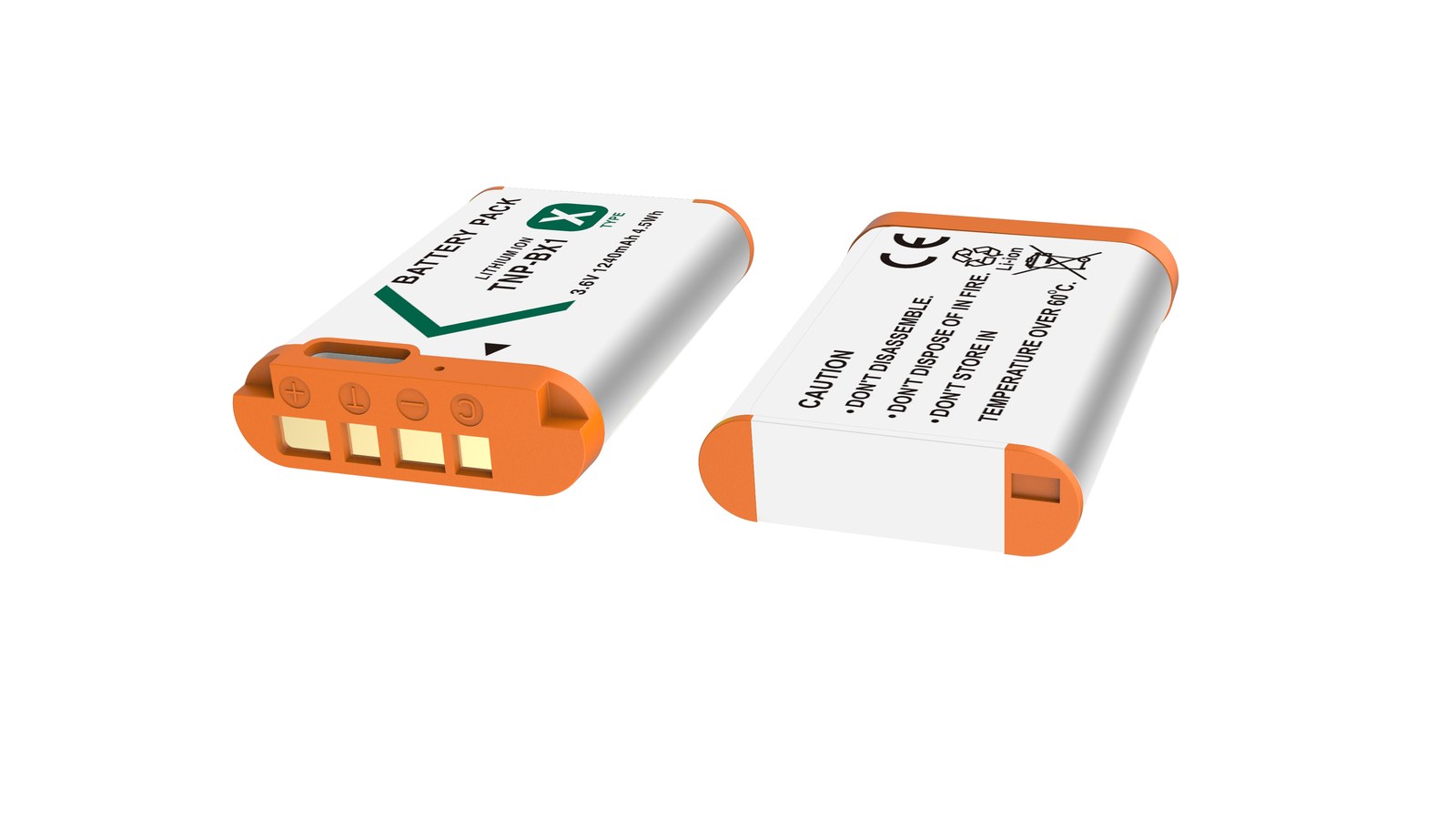
Check whether the numbers are stated properly. A listing that gives one capacity figure and never separates rated from typical is usually playing with the wording. This site lists 1090mAh typical, 1060mAh rated, 3.7V and 4.04Wh, with the details on the NP-BX1 compatible battery page.

Accept one premise as well: 1090mAh is below Sony’s roughly 1240mAh nominal figure for the original, and that is where the price difference comes from. Buying third-party is about paying ¥24.57 a piece so you can carry several, not about outlasting the original. Other packages are listed under Sony NP-BX1 batteries.

FAQ

Can I keep using a pack after the non-genuine notice?

Yes. The notice says identification did not pass, not that the pack cannot supply power. Dismiss it and shoot, while watching whether the gauge behaves consistently.

Will a third-party pack damage the camera?

The risk in normal use is low. The body handles voltage and temperature protection on its side, and the pack has its own board. Avoid a pack with a deformed shell, corroded contacts, or one that gets hot while charging.

Is fast drain on the first use normal?

It is common. The new pack’s curve has not aligned with the body yet, so the first readings are optimistic. After one or two full cycles the numbers settle.

How long can I shoot at 1 percent?

It depends on the body and what you are shooting. The gauge falls quickly at the bottom, so change packs at 10 percent rather than trusting the last point to finish a clip.

Posted on — Leave a comment

NB-13L II vs Canon Original: Capacity, Decoding, Price

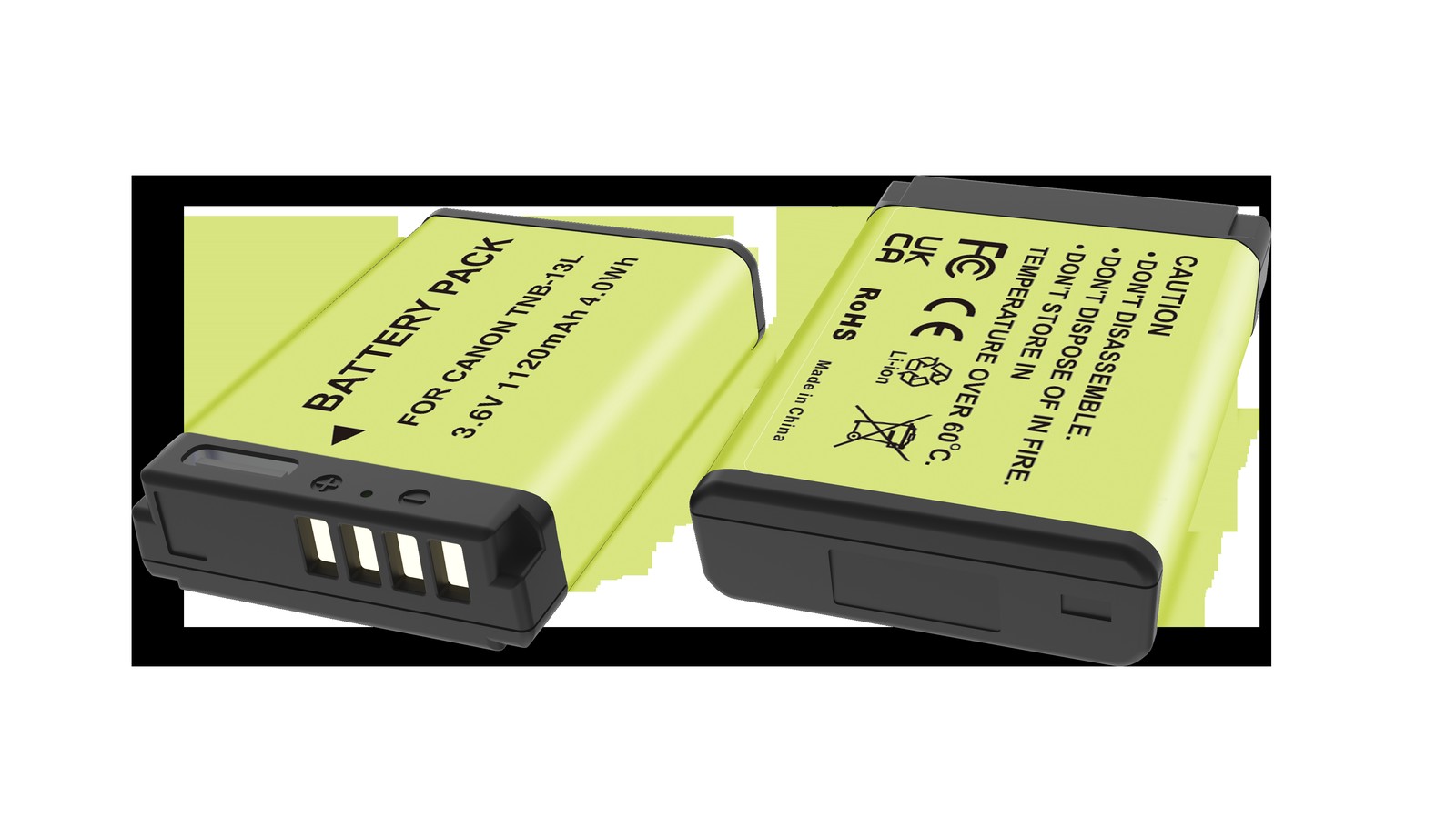
Short answer: the NB-13L II is close in capacity to the OEM NB-13L (rated 1250mAh / 4.5Wh / 3.6V); the improvements are in cell consistency and cycle life, not doubled capacity. Where the two genuinely differ is charge-display accuracy and price bracket — a single OEM pack usually sits well above the budget bracket, while third-party options such as YO’s come in within it. Keep those four points separate and the decision is not hard.

YO NB-13L camera battery render
Product render of the YO NB-13L compatible battery: front label, rear LED charge indicator and USB-C port.

First, a common misunderstanding worth clearing up: Canon makes exactly one model, the NB-13L, and there is no official “NB-13L II”. The second-generation label is a third-party manufacturer’s own product sequence naming, used to distinguish batches or cell designs. So when someone tells you the “second generation” doubles capacity, either the rating is inflated or they have misunderstood.

Capacity: let us be precise about the word

The OEM NB-13L is rated 1250mAh / 4.5Wh / 3.6V. The NB-13L II is rated close to that, and its improvement direction is cell consistency and cycle life — in plain terms, less variation between packs from the same batch and a gentler decline over time, not “twice the shots in one go”.

Why is a capacity breakthrough so hard? Because the battery compartment’s volume is fixed. Within the same 3.6V system and a similar case size, energy density is set by cell chemistry. Significantly more capacity would require a different chemistry or a larger body, and both create compatibility problems. So when you see a rating well above the OEM figure, question the rating method before believing in a technical leap.

Charge display and charging compatibility

The camera reads battery data through the contacts to estimate charge. Third-party packs are usually recognized and used normally, and Canon bodies generally do not show a “non-OEM battery” prompt, but the bar-counting algorithm was calibrated against the OEM discharge curve, so two things can happen:

  • Uneven bar drops. The first three bars last well, the last one goes quickly, or the display jumps from two bars straight to a warning.
  • Jumping percentages. On bodies that show a percentage, the number may not move continuously.

This does not affect operation, but it does affect your judgment of “how much longer can I shoot”. The workaround is not to rely on bars but on experience: if a pack gives you 40 minutes at room temperature, treat one remaining bar as roughly ten minutes left, rather than assuming one bar still means a long while.

Charging and dock compatibility

The OEM pairing is the LC-30 dock, which charges by insertion with the contacts at the base of the pack. Third-party packs generally work with docks of the same spec, but watch contact alignment — some third-party cases are slightly thicker and fit tightly, and repeated forced insertion wears the contacts.

Another difference is the choice of charging method. The OEM NB-13L can only be charged in a dock; third-party versions with a Type-C port can be charged by cable, which means one less charger to pack for a business trip. For travel, that is more useful than a capacity difference.

Four-point comparison

Item OEM NB-13L YO NB-13L II
Rated capacity 1250mAh / 4.5Wh Close to OEM
Voltage 3.6V 3.6V
Cell consistency OEM standard A key focus of the second generation
Cycle life OEM standard A key focus of the second generation
Charge display Reference curve May deviate; bars may drop unevenly
Charging method LC-30 dock Compatible with same-spec docks; some versions support direct charging
Price bracket Well above the budget bracket Within the budget bracket

How to pair them for best value

  1. One OEM pack for primary duty. For important shoots, where you need an accurate read on remaining charge, use the OEM pack and stop second-guessing.
  2. Two third-party packs as backups. For everyday recording, second angles, and long standby, use the NB-13L II. Lower cost, and losing one is not painful.
  3. Assign by use case, not by age. Give the OEM pack to situations that need precise runtime estimates, and third-party packs to situations where you can top up at any time.
  4. Number and rotate everything. OEM or not, rotate in order so no single pack is overworked.

Done this way, you usually save considerably over buying all OEM while keeping certainty where it matters. The NB-13L II is positioned as a dependable backup, not as a replacement for the OEM pack’s primary role. For the product line, see the NB-13L II category; for OEM specs and compatible bodies, see the NB-13L category.

FAQ

Does the bigger second-generation capacity mean more shots?

No. Capacity is close to OEM, so the actual shot count differs very little and depends mostly on shooting habits and camera age. Anyone claiming double the shots is almost certainly overstating the rating.

Can a third-party battery damage the camera?

A reputable product with overcharge, over-discharge, and over-current protection will not harm the body in normal use. The risk comes from unbranded low-grade cells and products without a protection board, so check for a clear brand name and warranty when buying.

Is it a problem to mix OEM and third-party packs?

Alternating them in the same body is fine, but do not charge them together or attempt to wire them in parallel. Charge readings may be inaccurate after a swap, so go by actual shooting time.

Why is the price so different? Where does the gap come from?

Mainly cell screening, protection-board components, quality control, and after-sales service. The OEM price also includes brand and channel costs. Third parties trim those, which is why they cost less — but quality varies widely between them, so a brand with a real model lineup and a warranty is the safer choice.

Posted on — Leave a comment

Charging NP-FZ100 Through the Camera’s USB-C Port: Does It Work?

It works, but keep two different things apart: charging the NP-FZ100 while it sits in the body via USB-C, and charging a removed pack in a USB charger. The first depends on whether your body supports USB power or charging. Newer bodies such as the A7 IV, A7S III, A7R V, A9 III, A1, FX3 and A7C II generally do; older ones may not, or only under certain conditions. The second has nothing to do with the body — any USB charger built for the FZ100 form factor will do it. In-body charging means one less thing in the bag, at the cost of a camera you cannot shoot with and a speed that is limited at both ends.

YO NP-FZ100 camera battery render
Product render of the YO NP-FZ100 compatible battery: front label, rear LED charge indicator and USB-C port.

Two Different “USB Charging” Setups

  • In-body charging: a USB-C cable goes into the camera, and the body’s internal circuitry charges the installed pack. It needs firmware and hardware support, and the body is occupied while it happens.
  • USB charger: the pack comes out and goes into a charger that takes USB input, fed by a phone brick, power bank or car adapter. Body-independent, so it works with any FZ100 camera.

If your body does not support USB charging, the second route still gives you the convenience of carrying only USB cables. The buying criteria are in how to choose an NP-FZ100 charger.

Three Things About the Real Experience

  • Convenient but slow: the internal charging circuit is deliberately conservative. Filling a pack rated around 2600mAh / 19.24Wh typically takes several hours, so a charger is faster when you are in a hurry.
  • Limited by the power source: a low-output brick or a laptop USB port is slower still, and may only hold the level steady rather than raise it. With a power bank, whether charging even starts depends on its output capability.
  • The body is tied up: you cannot pick the camera up and shoot while it is charging, which makes it inefficient for a rotate-packs-as-you-go workflow.

So the sensible role for in-body charging is overnight at the hotel or at home, or topping up between setups. It is not the answer when you need a full pack before you walk out the door.

When Not to Rely on It

  • A working rhythm that burns through two or three packs a day — a charger can fill one while you shoot with another, and the body cannot.
  • When the body is already warm. Charging after a long shoot stacks heat on top of heat; let it cool first.
  • Long recording sessions on a dummy battery or external supply, where the power logic is different; see uninterrupted power for video and streaming.
  • With unknown bricks or damaged cables. Unstable voltage and underspecified cable gauge are common sources of trouble.

Can You Shoot While Charging?

Some bodies accept external power: connect USB-C and the body draws from the supply first, so the pack neither discharges nor, in some cases, stops charging entirely. That is genuinely useful for fixed-position streaming and timelapse. The caveat is heat — continuous supply warms both body and pack, and long high-load recording can trip thermal protection. For genuinely uninterrupted recording, a dummy battery with an AC adapter is the more stable answer.

A Sensible Mobile Power Setup

When you are away from a wall, the efficient combination is a USB-input charger, a power bank and one reliable USB-C cable. That covers charging a removed pack and topping up the body with the same kit. Travelling with a light USB charger is more flexible than carrying a second mains charger, and it is easier to plan around; the packing logic is in how many batteries to carry when travelling.

Notes for In-Body Charging

  • Confirm your body supports USB charging or power delivery, and read the relevant section of the manual.
  • Use a brick and cable you trust and that are in good condition. No frayed cables.
  • Keep the body ventilated. No charging inside a camera bag or under a blanket.
  • Pause if the body or pack becomes clearly hot.
  • For long-term storage, keep packs at roughly 40–60% and top up every three months. Do not leave the camera plugged in as a storage solution.

FAQ

Does in-body charging harm the battery?

The body has its own charge management circuitry, so normal use adds no extra wear. Heat stacking and long storage at full charge are the things that actually shorten life.

My power bank is connected but the level keeps dropping

The input is not enough to cover what the body is drawing, so you are only slowing the decline. Move to a higher-output bank, or take the pack out and use a USB charger.

Do all Sony bodies charge over USB-C?

No. Older models differ in charging conditions and supported power, so go by your manual. If you are unsure, a USB charger is the safer route.

Is a fast-charge brick worth using?

It will not hurt, but the body’s internal circuit sets the current, so you are unlikely to gain much speed. The real benefit is a more stable supply.

Two charging options, same capacity: standard 2600mAh (dock required) or USB-C 2600mAh (phone charger or power bank). Pick the version on the NP-FZ100 product page; bulk pricing via wholesale.