Short answer: Nikon’s official EN-EL14 family has only two generations — the EN-EL14 (7.4V / 1030mAh) and the EN-EL14a (7.2V / 1230mAh). The EN-EL14a holds roughly 20% more and works in every body that takes the EN-EL14; the widely seen “EN-EL14+” is not an official Nikon model but a third-party label for a compatible, higher-capacity pack. So when choosing, only two things really need confirming: which generation your body shipped with, and whether the voltage and capacity on the label are honest.
What actually differs between the two
The EN-EL14 dates from around 2010 and arrived with the D3100, then went on to be used across a long list of APS-C DSLRs and Coolpix P models. The EN-EL14a appeared after 2013 with improved cells, lifting capacity to 1230mAh and nudging nominal voltage from 7.4V to 7.2V.
| Model | Nominal voltage | Capacity | Energy | Common original fitment |
|---|---|---|---|---|
| EN-EL14 | 7.4V | 1030mAh | About 7.7Wh | D3100, D3200, D5100, D5200, P7000, P7100, P7700 |
| EN-EL14a | 7.2V | 1230mAh | About 8.9Wh | D3300, D3400, D3500, D5300, D5500, D5600 |
| “EN-EL14+” | Usually 7.2V | Varies by maker | Varies by maker | Not official; a third-party designation |
The two generations share identical dimensions, terminal positions and latch, so physically they swap. The differences are capacity and the body’s battery identification strategy — and that is the root of every compatibility question that follows.
One common misconception worth correcting: the D3400, D3500, D5300, D5500 and D5600 all ship with the EN-EL14a, not the EN-EL14. If the manual for your D5600 says 14a, that is correct and you have not bought the wrong thing.
Compatibility: new works down, old comes with a discount
Nikon’s statement on the two generations is clear: the EN-EL14a can be used in all bodies that take the EN-EL14. In other words, older cameras such as the D3100, D5100 and P7700 run perfectly well on a 14a, and because capacity is higher, they last longer than with the original.
The reverse needs care. Newer bodies from the D3400 onward were designed around the 14a, and a first-generation EN-EL14 will usually still power up and shoot, but the charge estimate may be inaccurate — dropping bars faster or warning of an empty battery early. The cause is a different recording chip revision inside the pack, so the remaining-charge curve the body reads does not match.
This does not affect image quality or the shutter, and it will not damage the camera; it is purely a usability discount. If you have a pile of old EN-EL14 packs you want to keep using in a newer body, treating them as emergency spares is reasonable — as the main battery, less so.
Can the chargers be shared
Yes. Both generations use the MH-24 series dock, which is the most convenient part of this ecosystem — one dock covers the entire EN-EL14 family. Note that the first-party dock is strict about third-party packs and may occasionally stop partway through, so a universal charger is often less trouble.
Choosing by body
D3400 / D3500 / D5600: buy the EN-EL14a
These are the 14a’s original fitments, so buying a 14a carries no compatibility risk at all. On runtime, the official CIPA figures for the D3400 and D3500 are both above a thousand shots, with the D5600 slightly lower; a single pack covers most of a day out and two will see you through a full one.
Note that none of these DSLRs offers in-body USB charging, so the dock is the only route. Do not count on a power bank to rescue you on a trip — an extra battery is more useful than a power bank here.
D3100 / D3200 / D5100 / D5200: the 14a is the better buy
These shipped with the EN-EL14, but the 14a works perfectly and holds about 20% more. Unless you specifically want an exact match to the original, there is little reason to buy the first generation. First-generation packs are cheaper on the used market, so if you only need a spare, they remain a reasonable option.
P7000 / P7100 / P7700: watch the size and the original spec
The Coolpix P series uses the same battery system. The P7000, P7100 and P7700 all originally shipped with the EN-EL14, and the 14a works equally well. These cameras have tight compartments, so a third-party pack with poor shell tolerance can be hard to insert or remove; favour products with a consistent reputation for build quality.
Compacts like the P7700 draw more than a DSLR — the screen stays on and the zoom motor works constantly — so real frame counts usually come in below those of a DSLR. Plan on two packs from the start.
What “EN-EL14+” really is
On marketplaces the “EN-EL14+” spelling is very common, but it does not appear in Nikon’s official model list. It usually means a third-party pack that is compatible with the EN-EL14 family and holds more than the original. Some makers use it to mean “upgraded”, others as pure marketing.
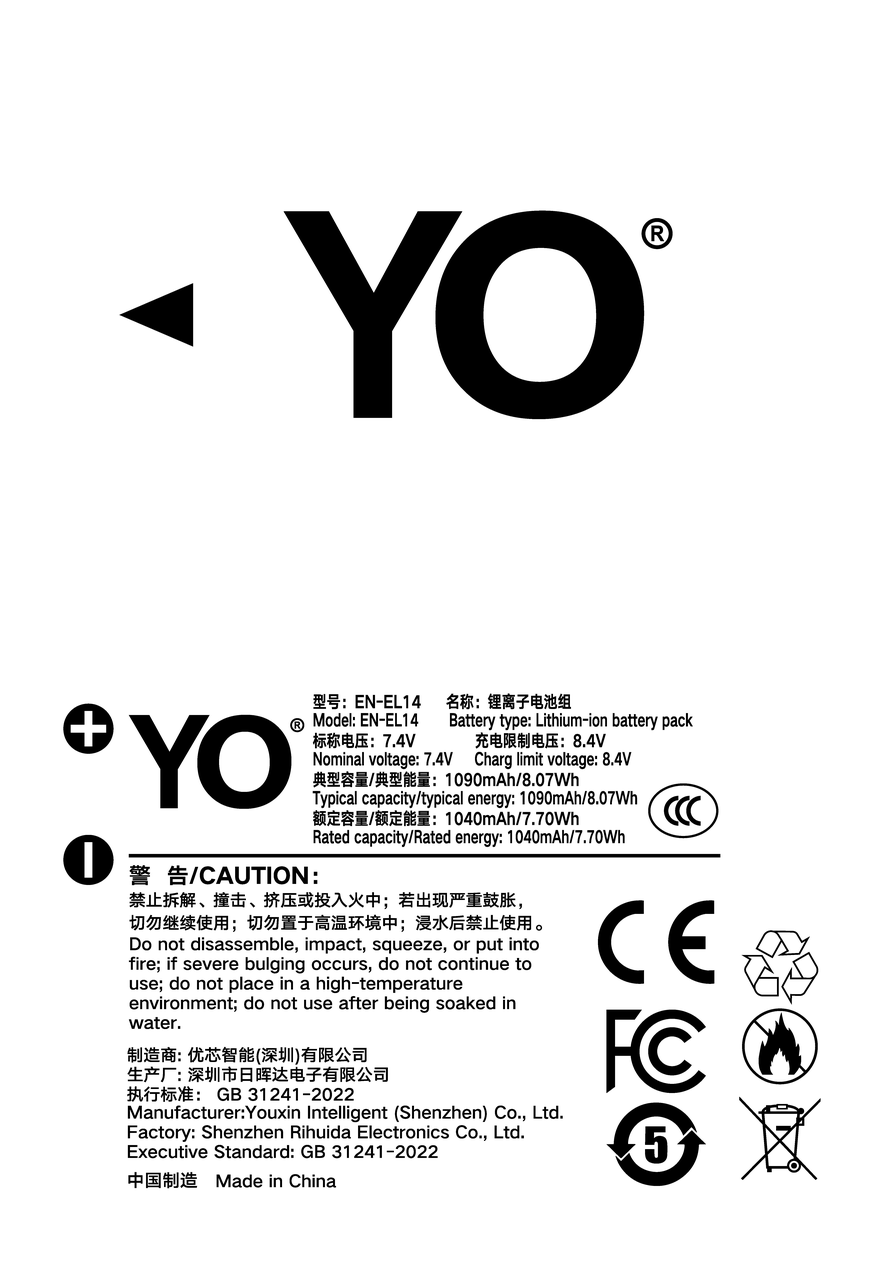
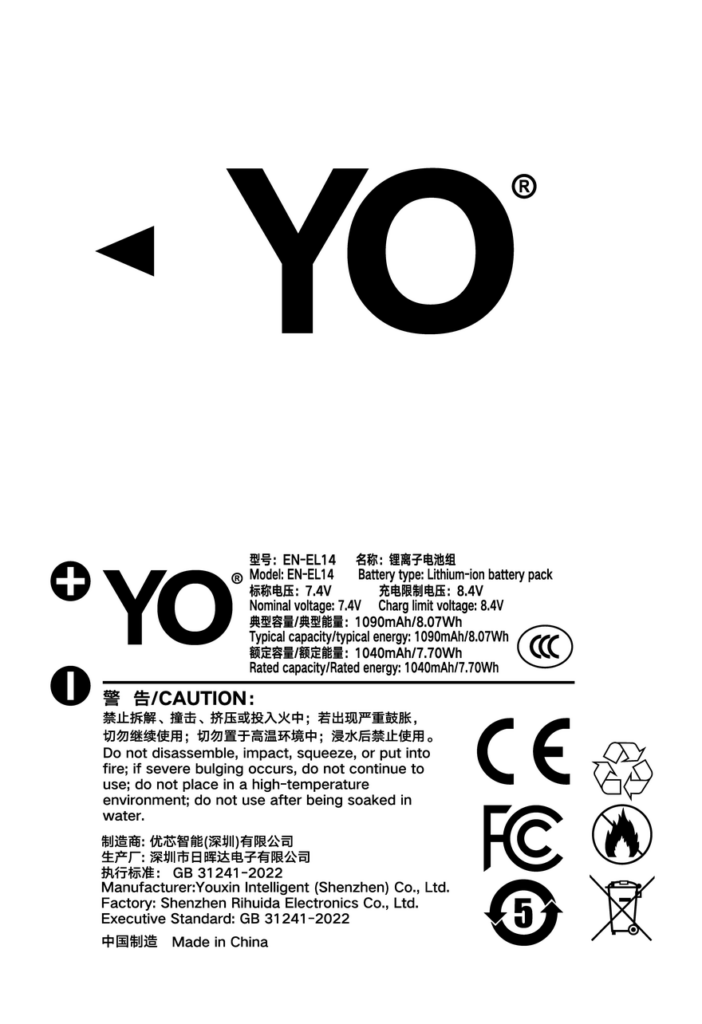
So when you see “14+”, do not infer performance from the model name — go back to the label: is the voltage 7.2V or 7.4V, what capacity is quoted in mAh, what energy in Wh. Those three numbers are what can actually be compared. Some products labelled “EN-EL14+” claim above 2000mAh, and figures far beyond the original spec usually mean the usable capacity is lower than advertised.
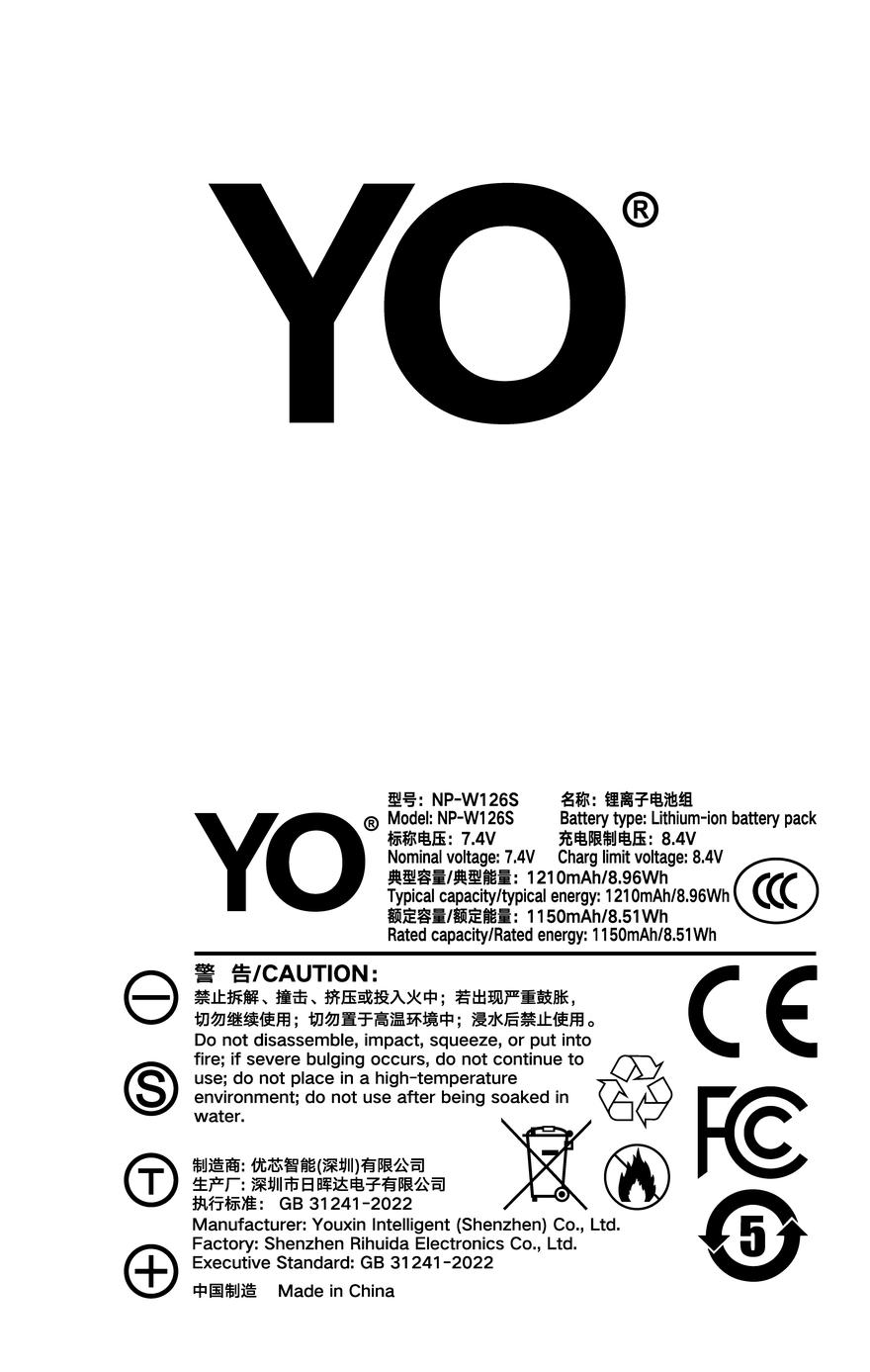
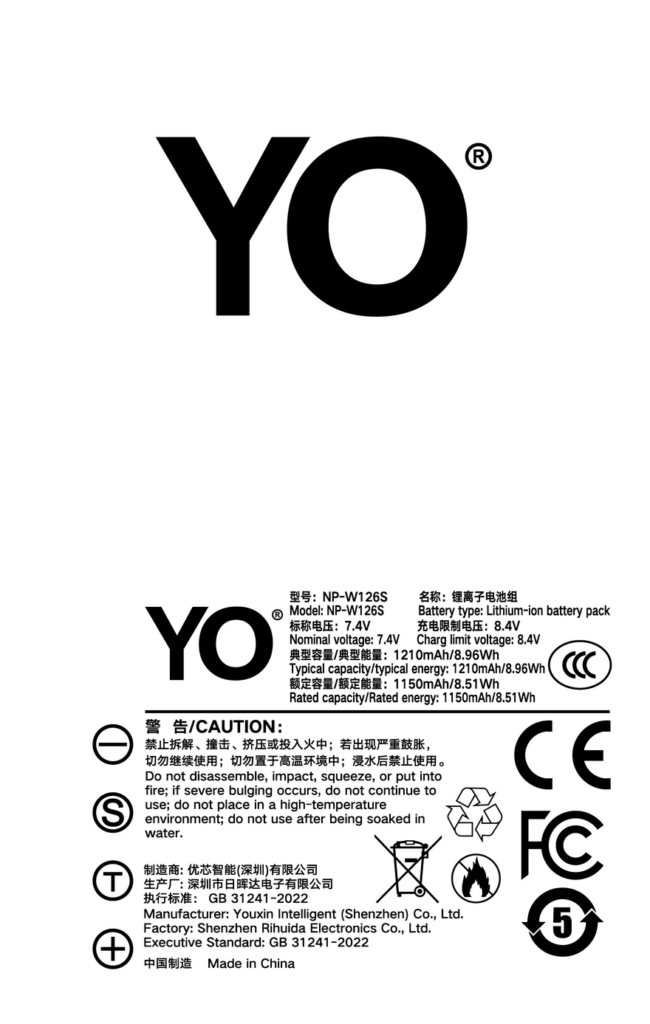
If all you want is a dependable replacement, treat it as “a third-party battery compatible with the EN-EL14 family” and stop worrying about the plus sign. Single-model specialists such as YO print voltage, capacity and supported bodies directly on the packaging, which is safer than reading the title. More on identifying the models is on the EN-EL14+ category page.
FAQ
Can the EN-EL14 and EN-EL14a be mixed?
Yes. A 14a in an older body is fine and holds more, while a first-generation pack in a body from the D3400 onward will still shoot but may show an inaccurate charge level. When mixing, make the 14a the primary.
Will an EN-EL14 damage a D5600?
No. The voltage range is compatible and the body has protection circuitry. Any issue is limited to charge estimation and does not affect the hardware.
Why do third-party packs quote much higher capacity than the original?
Some quote bare-cell capacity while the manufacturer quotes usable capacity, so the two are measured differently. In practice a third-party pack labelled 2000mAh is not necessarily longer-lasting than a 1230mAh original, and reported real-world results are more reliable than the number.
Is this battery compatible with the EN-EL15?
No. The EN-EL15 is larger, runs at 7.0V, and is used by the D7000 series and Z-series mirrorless bodies, so the two cannot be swapped — see the EN-EL15 category page. For another entry-level DSLR system worth comparing, the compatibility logic of the Canon LP-E6 series is a useful contrast.