Posted on — Leave a comment

Is 1050mAh Worth the Extra? Cost per Shot vs 950mAh

YO LP-E17 相机电池

Short answer: for most people the premium a 1050mAh carries over a 950mAh is not good value. But if your pattern is two batteries at most per outing with no convenient place to swap, it is. The reason is simple: the two differ by a hundred milliamp-hours, about ten percent, which usually works out to a few dozen extra frames, while the extra money would buy a good part of a second 950mAh. What really decides the choice is not the capacity number but how many batteries you are willing to carry.
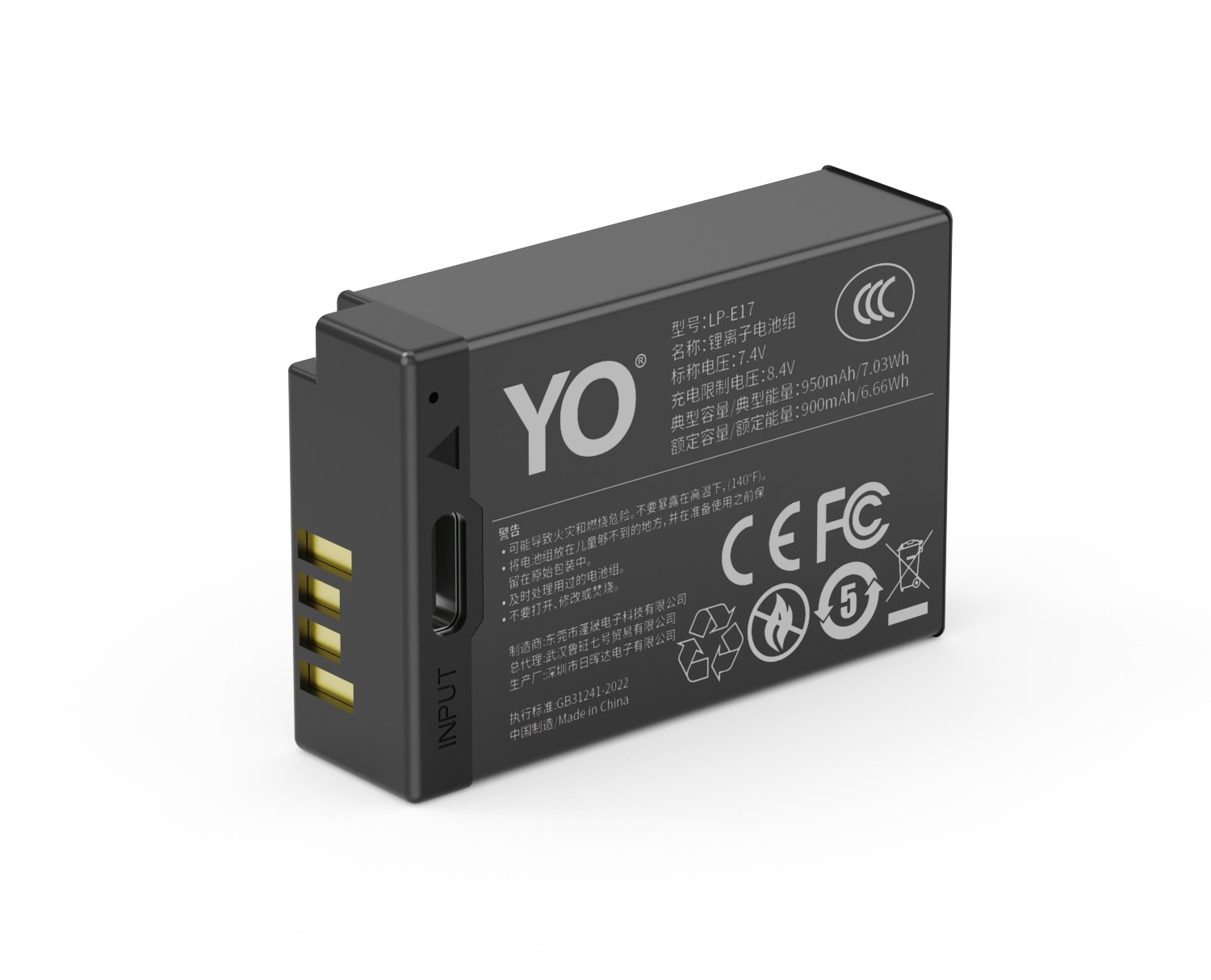
YO LP-E17 camera battery render
Product render of the YO LP-E17 compatible battery: front label, rear LED charge indicator and USB-C port.

First, translate 100mAh into frames

A 100mAh difference in rated capacity is theoretically a 10.5% gain. But the usable window inside a camera is not the full capacity: the tail before cutoff voltage cannot be drawn, and the body’s estimate is conservative, so the practical gain is usually between 8% and 10%.

Frames are more intuitive. If a 950mAh manages roughly 450 to 600 frames under normal shooting, a 1050mAh lands around 500 to 650. In other words the extra is a few dozen frames of headroom in a day, enough for one more small scene, not enough to leave a battery at home.

Item 950mAh 1050mAh
Rated capacity 950mAh 1050mAh
Relative capacity Baseline About +10%
Frames under normal shooting (estimated range) About 450-600 About 500-650
Price band Common at the budget end of the market Usually a few tens more
Weight Lighter Slightly heavier, under fifteen grams more
Suited to Rotating several packs, everyday carry Carrying fewer packs, long uninterrupted days

How to work out cost per shot

Do not compare total price divided by total capacity. That spreads the cost of the shell, protection board, and housing across the figure and hides the marginal return. What matters is the increment: how many additional frames the extra money buys.

  1. Note the real price difference between the two tiers. Estimating on the order of “a few tens more” is fine; you do not need it to the dollar.
  2. Subtract the midpoint of the 950’s frame range from the midpoint of the 1050’s. The increment is usually around fifty frames.
  3. Divide the extra frames by the price difference to get frames per extra dollar. The figure usually lands at one to two frames per dollar.
  4. Now run the alternative: spend the same money on a second 950mAh. That buys several hundred extra frames, or more than five per dollar.

The conclusion follows. On pure runtime efficiency, the marginal return from paying more for a 1050 is clearly below adding another 950. The 1050’s value is not efficiency but the act of carrying one fewer battery: the volume, the weight, the swap, and the seconds you lose doing it.

Three kinds of shooter, three conclusions

If you carry only two batteries, take the 1050. Your constraint is count, not total capacity. Two 1050s give you roughly what two 950s give plus a bit more, and that bit more is exactly what covers the unexpected shooting before you wrap.

If you habitually carry three or more, take the 950. When count is plentiful, per-battery capacity barely affects the outcome and rotation rhythm dominates. Three 950s already exceed two 1050s in total capacity at lower cost, and swapping is one extra motion.

If you shoot mostly video, look at it separately. Video is a continuous load with less tolerance for voltage sag at the end, so more capacity means the low-battery warning comes later and the finish is calmer. Even with three packs, this group can keep the 1050 in the primary slot.

Two hidden costs beyond capacity

The first is charging time. On the same dock, a 1050 takes ten or twenty minutes longer to fill. If you charge everything overnight, the difference disappears; if you top up between setups, time is a real cost.

The second is consistency. Mixing capacities makes the body’s gauge jump around and rotation planning gets messy. Running one tier is simpler, which argues for standardizing rather than buying one 950 and one 1050.

YO’s LP-E17 comes in 750, 950, and 1050mAh so that you can choose by how many packs you carry rather than by “bigger is better.” If you are still matching tiers to bodies, start with the capacity and compatibility guide, then compare specific products in the 1050mAh category.

FAQ

How many more frames does a 1050mAh give than a 950mAh?

A few dozen under normal shooting, on the order of fifty. Burst shooting, stabilization, and cold weather narrow the gap; static composition and less chimping widen it. Do not extrapolate linearly from the percentage, because discharge efficiency at the tail is not uniform.

Is paying a few tens more for 100mAh a waste of money?

Not entirely. If it lets you leave a battery at home, the saved weight and swap time have value. But if your bag already holds three or four packs, the extra frames are unlikely to be used, and then it is not worth it.

Can I run one 950 and one 1050 together?

Yes. Voltage and contacts match and the body does not distinguish them. Be aware that the gauge logic differs slightly and the low-battery warning will trip at different points, so charge both fully before important work and save the larger one for the second half.

On a tight budget, which should I buy first?

Buy the 950mAh first and put the money toward a second one. Two 950s beat one 1050 on both total runtime and flexibility; only when your bag space or carry habit strictly limits you to two packs should the 1050 come first.
Posted on — Leave a comment

1050mAh vs the Original LP-E17: Can You Feel the Weight?

YO LP-E17 相机电池

Short answer: most people will not notice. Against the original at about 1040mAh the difference is negligible, and against 950mAh it is usually under fifteen grams, roughly a coin or two. Inside a body weighing more than four hundred grams that is under four percent, and it does not produce a clear “this got heavier” sensation during normal handling. What actually gets amplified is not absolute weight but the center of gravity and the way you hold the camera.

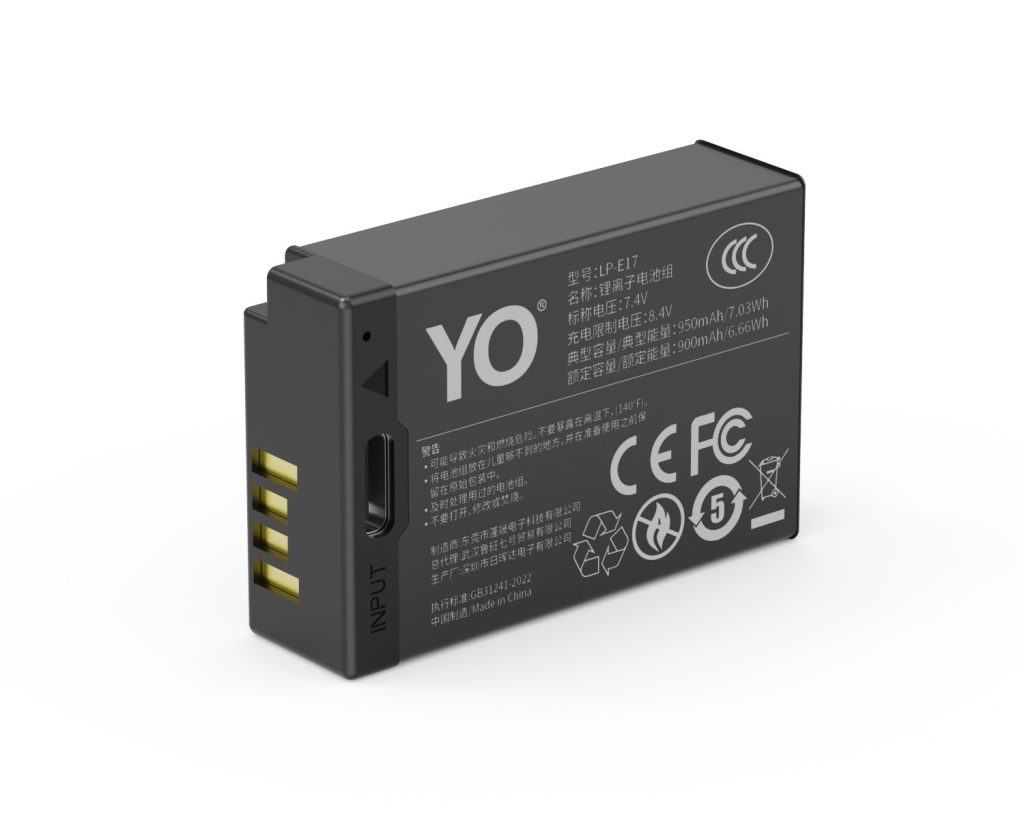
YO LP-E17 camera battery render
Product render of the YO LP-E17 compatible battery: front label, rear LED charge indicator and USB-C port.

Let’s get the numbers straight

The original Canon LP-E17 weighs on the order of forty-five grams, on the light side for its class. Third-party high-capacity versions carry more cell material and therefore weigh a little more, but the spread is limited: from 750mAh to 1050mAh the difference for the whole battery is usually under fifteen grams, never a doubling.

A common misunderstanding is that a forty percent capacity increase means a forty percent weight increase. In practice most of a battery’s mass is the shell, the protection board, and the tabs; the cell is only part of it, and higher-capacity cells also tend to have better energy density. The weight penalty for added capacity is therefore non-linear and flattens out as you go up.

For any individual product the rated weight is whatever the maker publishes, and batches and protection-board designs will vary by a few grams. Thinking in terms of “under fifteen grams” is enough; there is no point chasing single digits.

Absolute weight matters less than proportion

The same battery feels entirely different depending on the body it goes into. The lighter the body, the larger the battery’s share and the more noticeable the shift in balance. A rough comparison by body weight follows.

Body Body weight, order of magnitude Battery share Perceived weight difference
EOS R50, M series Just over 300g About 15% Fairly noticeable
EOS RP, R8, R10 Just over 400g About 10% Mostly imperceptible
EOS 850D, 77D Around 500g Under 10% Almost imperceptible
With a battery grip fitted Clearly higher Further diluted Imperceptible

The pattern is that lighter bodies and smaller lenses make the battery’s weight easier to feel. Fit a fast zoom and the body-plus-lens combination passes a kilogram, at which point fifteen grams is completely submerged. Any discussion of whether you can feel it has to start by naming the body and the lens.

Three situations that magnify the difference

Carrying the camera on a strap for hours. With the camera hanging from your neck, the strap carries everything, and any increment accumulates into soreness over a day. Fifteen grams is no longer fifteen grams; it is fifteen grams times a whole day. Hiking, street shooting, and trade shows are where weight savings pay off most clearly.

Shooting one-handed with the arm raised. With the arm extended, torque scales with arm length, and a battery sitting behind the body’s center of gravity produces a lever effect that tires the wrist sooner. On a small body like the 200D with a pancake lens, the difference is perceptible.

Portrait orientation. Rotating the camera moves your grip, so weight on the battery-compartment side sits farther from your support point and the body feels more lopsided. This is one reason many portrait shooters add a grip to bring the balance back.

Conversely, on a tripod, on a gimbal, or carried cross-body on a sling, the structure absorbs the battery weight almost entirely and the question is moot.

How to check for yourself instead of guessing

  1. Weigh both batteries on a kitchen scale and write down the grams. This establishes the real difference and keeps you from being led by the assumption that more capacity must mean more weight.
  2. Set the camera to the same state, fit the 950mAh, hold it out one-handed for twenty seconds, then repeat with the 1050mAh. Do it with your eyes closed to avoid priming yourself.
  3. Walk around for ten minutes with the camera on a strap and note whether the pressure points behind your neck and on your shoulder change. This is the closest test to real use.
  4. If you cannot tell the two apart either time, weight is not a selection criterion for your body and your shooting style, so choose on capacity and price.

The value of this routine is that it removes the psychological factor. People instinctively pay more attention to something new, more expensive, and higher-capacity; closing your eyes and fixing the duration cancels part of that bias.

One more thing to remember: weight can be managed with a strap, a different grip, or a lighter lens. Capacity cannot. A battery that runs out a few dozen frames early may cost you a shot. So the order of selection should be to decide the total runtime you need, then pick the lightest tier that meets it, rather than the other way around.

YO’s LP-E17 splits capacity into 750, 950, and 1050mAh. The 750 tier suits light travel where you shoot mostly stills and can recharge at the hotel that night; the 1050 suits long days away from power. For the exact body list, see the capacity and compatibility guide, or compare the 750mAh category with the 1050mAh category directly.

FAQ

Will 1050mAh make the camera heavier or more tiring to hold?

On bodies above four hundred grams, essentially no. The difference is under fifteen grams and sits near the center of gravity, so the lever arm is short. It may register on a body just over three hundred grams, when carrying on a strap, or when shooting one-handed with the arm raised.

Why doesn’t weight scale with capacity?

Because the shell, protection board, and tabs weigh the same regardless, and the cell is only part of the total. Higher-capacity cells also tend to have better energy density, so weight per unit of capacity falls; a forty percent capacity gain often brings only a ten to twenty percent weight gain.

Does the weight difference affect gimbal balancing?

Slightly. Gimbals are sensitive to balance, so if the rig feels nose- or tail-heavy after a swap, rebalance once. Fifteen grams normally falls within what the motors can compensate and will not prevent balancing.

For light travel, should I take the 750 or the 1050?

It depends on whether you can recharge that day. If you are back at the hotel and shooting at a moderate pace, the 750 is lighter; if you are out all day with a heavy shooting load and no fixed charging point, the 1050’s extra runtime is worth far more than fifteen grams. For a middle option, see the 950mAh category.

Posted on — Leave a comment

LP-E6+ Cycle Life — What the Enhanced Version Adds

Short answer: what is “enhanced” about an LP-E6+ shows up in discharge stability, not in capacity and not in cycle count. Lasting longer in practice means that after a year or two the voltage sags less, the gauge stops jumping, and bursts are less likely to trigger an early low-battery warning — it does not mean hundreds of extra charge cycles.

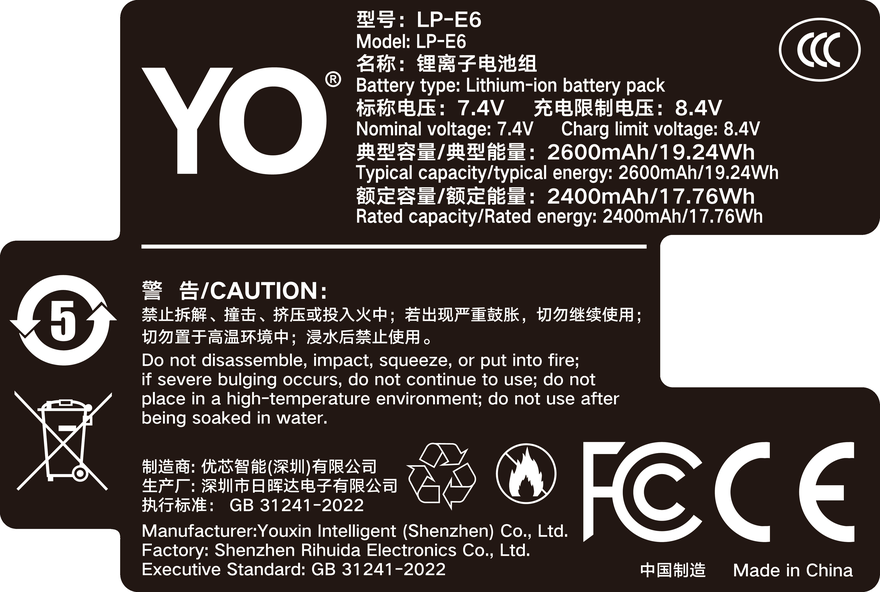
YO LP-E6+ battery rating label
Rating label of the YO LP-E6+ battery: nominal voltage, typical capacity and safety certifications.

The distinction is worth stating first. Many people read “enhanced” as “bigger capacity, longer life”, then find the rated capacity is barely different from a Canon LP-E6N and conclude they were shortchanged. The two were never being compared on the same axis. Below we take cycle life apart: what determines it, which part fails first, and how you can check it on your own bench.

1. Before discussing life, re-establish the third-party premise

Canon’s official LP-E6 family has exactly four models: LP-E6 (1800mAh), LP-E6N (1865mAh), LP-E6NH (2130mAh), and the high-discharge LP-E6P introduced in 2024 with the EOS R5 Mark II — all nominally 7.2V. None of the four carries a plus sign.

That shapes how you read any life figure: LP-E6+ is not a Canon designation — it is how some third parties (YO included) label an enhanced version — so there is no unified official specification, and life is the combined result of cell selection, sorting standards and protection-board design, which is why two batches under one name can differ by a tier. What follows therefore gives methods, not numbers.

2. Cycle life really comes down to three variables

The first is the cells themselves. Capacity fade is fundamentally loss of active lithium and degradation of the cathode structure, and how you use the pack matters enormously: long storage at full charge, heat and deep discharge all accelerate it. The same pack stored at half charge in a cool place versus left in a car year-round can differ more after one year than two brands differ from each other.

The second is the protection board’s current limit and cutoff points. A third-party board decides two things: how low the pack discharges before being cut off, and how high it charges before stopping. Conservative cutoffs, such as a slightly higher discharge cutoff, produce prettier cycle numbers at the cost of usable capacity; aggressive ones feel great for six months and then fade faster. Users cannot see this, only infer it from long-term behavior.

The third is consistency of the discharge plateau. This is where “enhanced” does its work. The plateau is the voltage level a pack holds at mid state of charge. Flatter plateau and lower resistance mean less voltage sag under heavy current — bursts, long exposures, video — and less chance of the body misjudging the charge level.

  • Lower resistance → less sag under high current → the body reads a voltage closer to the real remaining charge
  • Better cell consistency → in a multi-cell series arrangement, no single cell reaches cutoff first and takes the whole pack offline early
  • Flatter plateau → the gauge falls more linearly from full to empty, without a jump from 40% to 15%

Strictly speaking, then, an LP-E6+ improves how completely the same charge can be extracted, not how much charge there is. On a spec sheet those two look similar; in use they feel entirely different.

3. Where aging shows up first

An LP-E6+ that has been in service for over a year usually shows one of the following symptoms. Use them to work out whether this is normal fade or time to replace.

Symptom Most likely cause Still usable
Bars fall slowly at first, then plunge Rising internal resistance, larger sag under load Yes, but not for important work
Charged to full, sits overnight, reads just over 90% next day High self-discharge or high board quiescent draw Watch it; replace if it keeps getting worse
Charges to “full” quickly but lasts very little in the camera Real capacity has faded; cutoff trips early Replace
Low-battery warning after ten-odd frames in a burst, recovers after a rest High resistance, momentary sag tripping protection Light loads only
Noticeably hot while charging, slight case swelling Cell degradation or board fault Stop using it

The first two can appear on most third-party packs and fall within normal range; the last two, especially swelling, are not open to discussion — stop using the pack. As for “how much fade in a year is normal”, a common reference range is 70-80% capacity retention after 300-500 full cycles, but that is a general pattern, not a commitment about any particular pack.

4. Four checks you can actually run

  1. Do a full-charge rest test. Charge fully, take the pack off, leave it at room temperature for 12 hours, then put it in the body and read the level. The smaller the drop the better; clearly below 90% points to self-discharge or a gauging problem.
  2. Record charge time. Same charger, same starting level — a clearly shorter charge than when new is usually a direct signal of capacity fade.
  3. Run a shooting comparison. Same body, same shooting rhythm (bursts plus playback), compare how long the old and new packs last. You only need the relative gap, not an exact frame count.
  4. Feel the temperature. Neither charging nor discharging should make the pack too hot to hold. Warm is normal; hot is not.

5. Getting another two years out of a pack

The method is not complicated, but it takes some discipline. Store packs you are not using at 50-60% in a cool, dry place and top them up every two or three months; do not leave a pack on the charger overnight; do not wait for the camera to shut down before charging; and in summer, do not leave spare packs in the car. Doing these helps more than switching brands.

If you are comparing several packs, start with the other articles in the LP-E6+ category, then look at the LP-E6NH category for how Canon’s high-capacity model is positioned; to confirm official specifications, the LP-E6 series category has the details.

FAQ

Is LP-E6+ an official Canon model?

No. Canon’s official LP-E6 family is LP-E6, LP-E6N, LP-E6NH and LP-E6P. “LP-E6+” is a third-party label for an enhanced version; Canon has no such model and therefore no official specification sheet for it.

Does a higher cycle count always mean a better pack?

Not necessarily. Rated cycle counts come from specific test conditions and differ widely from real use. For photography, internal resistance and the discharge plateau matter more — they decide whether the pack cuts out suddenly under bursts and long exposures.

After a year or so the runtime is clearly shorter — is it broken?

In most cases that is normal fade, not a fault. Run the four checks above: if the only symptom is shorter runtime, with no swelling and no heat, it can continue as a backup. If bursts trigger a low-battery warning that recovers after a rest, or the pack gets hot while charging, replace it.

Why can’t you give an exact fade percentage?

Because too many variables affect it: storage temperature, whether it was stored full, depth of discharge, charger quality, body load. Detached from specific conditions, any precise number is meaningless. A range plus a method is more useful than a tidy figure.

Posted on — Leave a comment

LP-E6P Long-Term Wear: Degradation and Swelling Risk

Short answer: LP-E6P rarely ages first by “holding less”. It ages by “failing to hold up under heavy load” — daily shooting shows nothing, but as soon as you move to 8K or high frame rates, recording time is noticeably shorter than a new pack. The reason is that it works at high discharge current for long periods, so rising internal resistance becomes the bottleneck before capacity loss does. Swelling risk is genuinely higher than with capacity-oriented packs, but it is manageable, and the key is avoiding a full-charge store immediately after a hot heavy session.

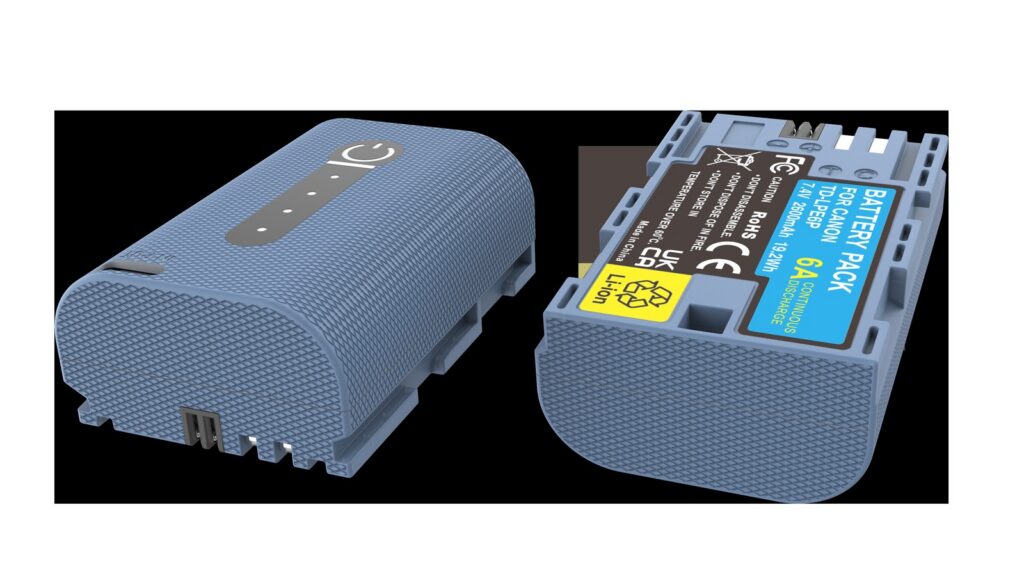
YO LP-E6P camera battery render
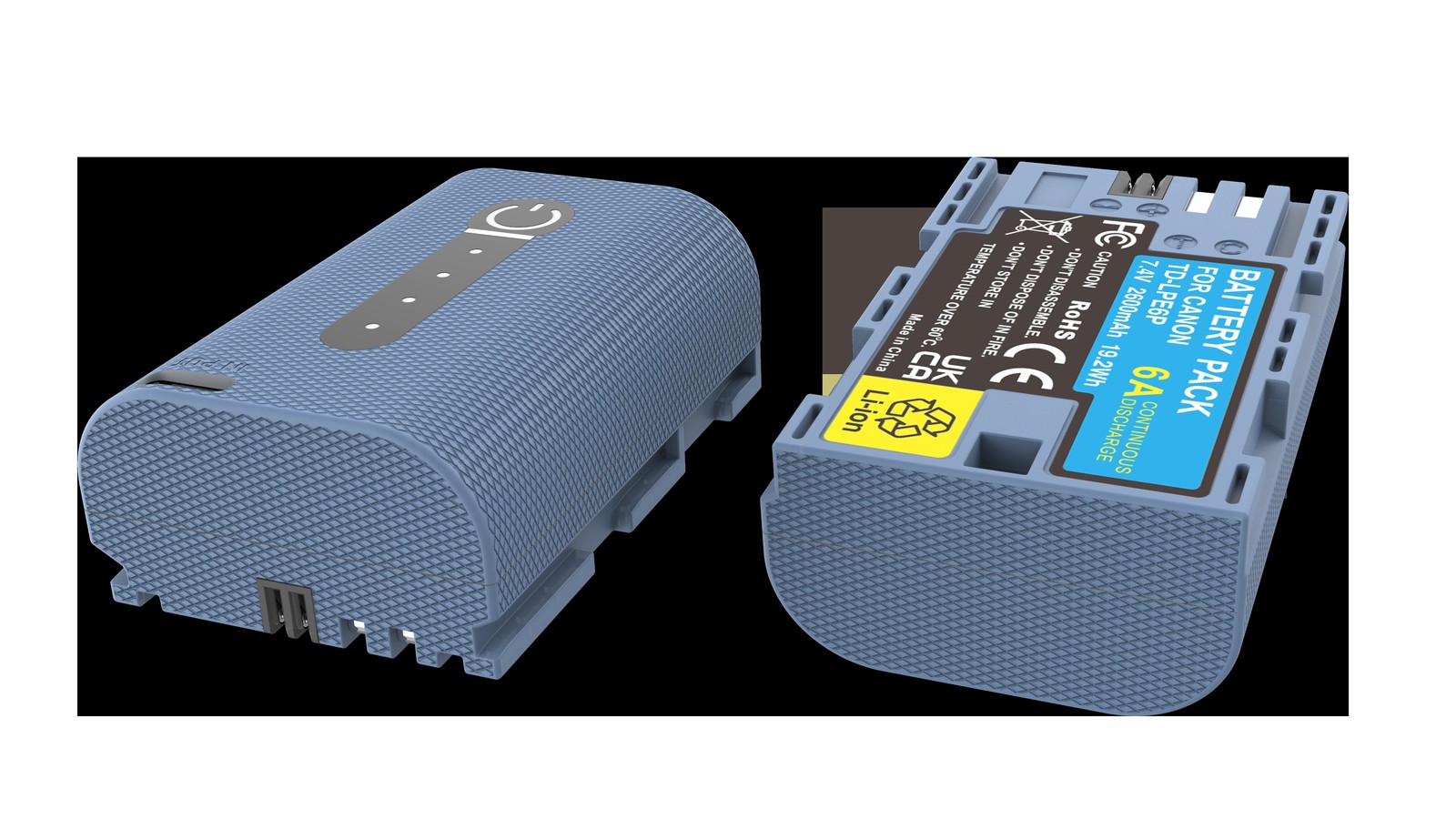
Product render of the YO LP-E6P compatible battery: front label, rear LED charge indicator and USB-C port.

LP-E6P is the model launched in 2024 with the EOS R5 Mark II, and Canon states its selling point plainly: higher continuous discharge capability. In capacity terms it stays in the 2130mAh class, the same tier as LP-E6NH. That means it is not a longer-lasting battery but a battery that handles more current, and judging its health requires a different set of standards.

One: three knock-on effects of high discharge

The first is heat. During high-current output, ohmic losses inside the cells grow with the square of the current, and all of that energy becomes heat. On an R5 Mark II at 8K or high frame rate, the pack’s sustained current is far above what stills demand, and the body’s own heat adds to the pack’s, so temperatures run clearly higher.

The second is rising internal resistance. Heat accelerates the rise in resistance, and higher resistance in turn produces more heat at the same current — a positive feedback loop. That is why packs used under heavy load often degrade faster and faster rather than declining evenly.

The third is voltage sag. The body decides whether there is charge left by reading terminal voltage, which equals open-circuit voltage minus current times internal resistance. Once resistance grows, a large current draw collapses the terminal voltage immediately, and the body concludes the pack is low and ends the take early or asks for a swap. There is still energy inside; it simply cannot be released.

Two: two degradation paths, considered separately

Dimension Behavior How to notice Effect
Capacity fade Less total energy stored Shorter light-load shooting time, shorter charging time Lower overall runtime
Power fade Voltage sags quickly at high current Recording time shrinks only in heavy modes Top-spec features become limited

Both paths usually run at once, but at different speeds. In a high-discharge pack, power fade generally leads, which produces an easily misread situation: stills are perfectly normal, then 8K stops early “for no reason”. Users suspect body overheating or a firmware problem, when in fact swapping in a new pack restores normal behavior.

This also explains a common question — why the same pack behaves normally in someone else’s body. Their body may simply never need that much continuous current, so power fade never becomes a bottleneck in their work.

Three: three checks that need no instruments

  1. Heavy-load comparison. On the same body, same recording spec, same ambient temperature, record with a new pack and with the pack in question until each stops automatically, and compare the times. A difference within two tenths is normal aging; beyond three tenths, power fade is clearly significant.
  2. Voltage sag observation. At low charge (below three tenths), start a heavy recording and see whether the body quickly warns about low battery or stops outright. A new pack still holds for a while; an old one often gives up within seconds to tens of seconds.
  3. Charging and heat. Charging from the same level on the same charger, a clearly shorter charge time — or a pack that runs noticeably hotter than a new one during charging — is supporting evidence of raised internal resistance.

Of the three, the first is the most reliable and the most worth doing once when the camera is new, as a baseline record. Without a baseline, every later feeling that “it got shorter” stays unquantified.

Four: swelling risk, when to replace, and spare strategy

Swelling is gas generation inside the cell raising internal pressure. For LP-E6P, three factors stack up: the heat of heavy load, the high potential of a full charge, and electrolyte decomposition after long cycling. All three together is the worst case, and the typical scenario is “half a day of 8K, the pack still hot, straight onto the charger at home until full, then left in a bag overnight”.

The safer routine: after a heavy session, let the pack cool in open air to near room temperature before charging; take it off the charger once full rather than leaving it there; store long-idle packs at four to six tenths of charge. None of this is complicated, but it cuts the risk substantially. The checks match those for capacity packs: lay it flat on a table and see whether it rocks, look along the seam against the light for gaps, and notice whether it slides into the body more tightly. Any clearly abnormal result means retire it.

As for timing, use “heavy-load recording time down to seven tenths of a new pack” as your reference line rather than waiting until it is unusable. Power fade accelerates late in life and tends to surface exactly when you need it most — a sudden stop during an important 8K shoot costs far more than a pack.

On spares, bodies that take LP-E6P generally draw a lot, so two packs is the floor. A sensible arrangement keeps one relatively new pack as the dedicated top-spec pack and demotes older packs to routine 4K or stills. That extracts the remaining value from old packs without putting critical takes at risk. YO’s compatible LP-E6P suits a supplementary role, absorbing cycles. For the generational differences between LP-E6P and LP-E6NH, see the LP-E6P category; if you also shoot bodies like the R5 or R6, the LP-E6NH category covers the capacity-oriented options. Cold further lowers terminal voltage, and the mechanism is described in cold-weather battery behavior.

FAQ

Is LP-E6P longer-lasting than LP-E6NH?

Not in that sense. Both are in the same capacity tier, and LP-E6P’s advantage is continuous discharge capability. On a heavy-load body it keeps top-spec modes running steadily; under light loads its cycle life is not necessarily better than a capacity-oriented pack, because high discharge itself generates more heat.

Does it degrade more slowly in an older body?

Usually yes. Older bodies draw less current, so the pack works in a gentler range, with less heat and slower growth in internal resistance. But that also means the premium you paid for high discharge capability never turns into real benefit.

Is a slightly warm battery normal?

Warmth after heavy recording is normal and subsides as it cools. If it is still clearly warm after resting at room temperature, or becomes unusually hot while charging, stop using it immediately and check the charger.

Can I charge an LP-E6P on a third-party charger?

A reliable dock charger is fine, but confirm that its cut-off voltage and current strategy match a 7.2V two-cell series pack. Chargers of unknown origin at unusually low prices carry higher risk; without complete overcharge protection, they are a common source of swelling and safety incidents.