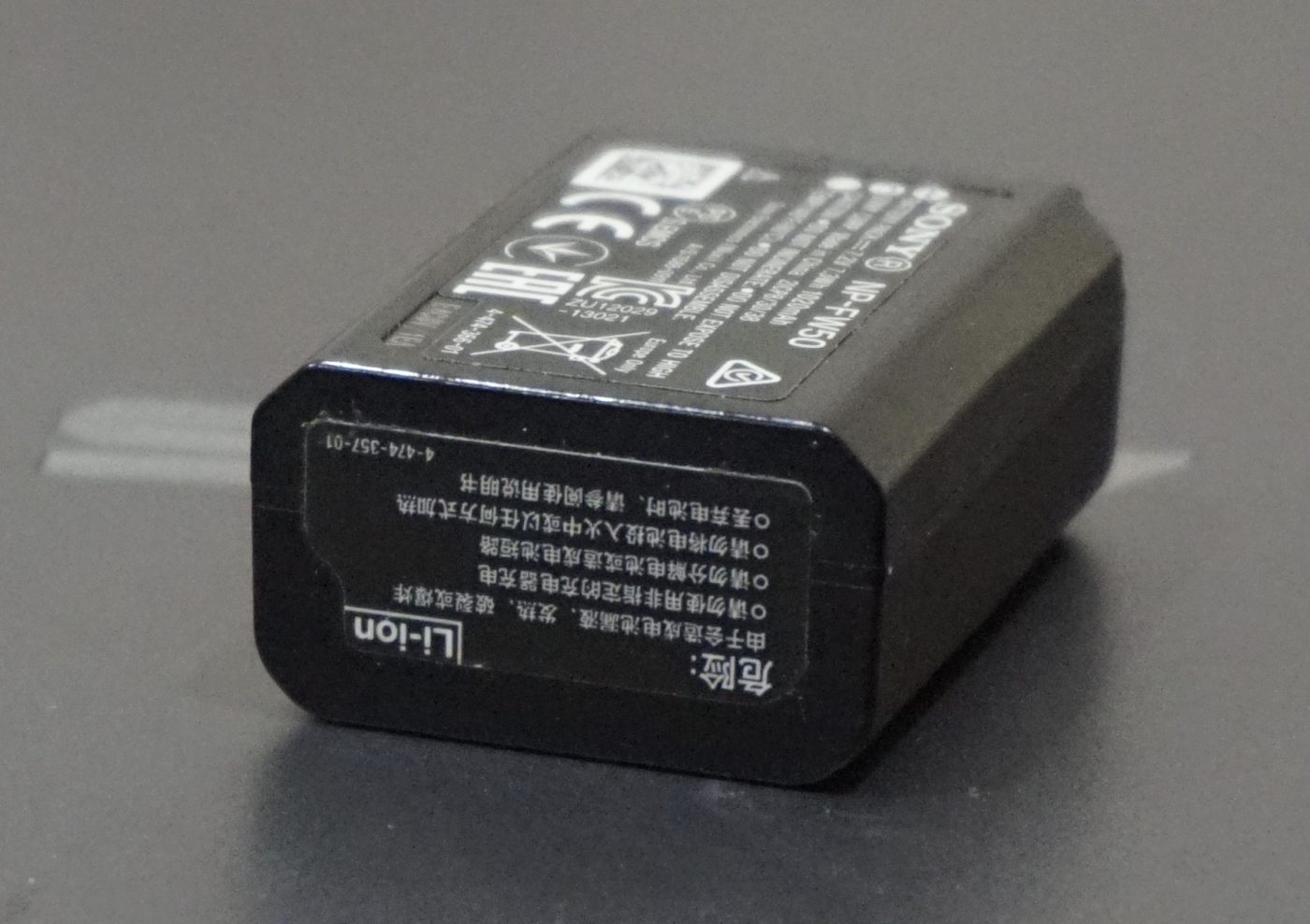
Short answer: capacity is almost the same across all three. What actually differs is where the charge comes from and how many cells you carry. Shoot at home with a dock you already own? Take the plain replacement cell. Travel often and want one less accessory? Take the USB-C direct-charge version. Rotating two or more packs in a day? Add a two-slot charging case for parallel charging and storage. They work together; this is not an either-or choice. Our NP-FW50 compatible cell is quoted at 1100mAh typical, 1050mAh rated, 7.4V and 8.14Wh; the original Sony NP-FW50 is 1020mAh at 7.2V (7.3Wh). The USB-C version is also 1100mAh at 7.4V, with a Type-C port built into the cell. A battery case produces no power of its own: it charges and stores these cells.
What each version is for
The plain compatible cell answers one question: the pack in the camera is worn out, or you need a spare. It has no charging port, so refilling means a dock or the body’s USB path — and on this generation most bodies have no USB charging at all, which makes a dock mandatory. It is the simplest and usually cheapest option if you already own a charger and just want more packs.
The USB-C direct-charge version moves the charging circuit into the cell. A Type-C port on the battery accepts a phone charger, power bank or laptop port, so the dedicated dock stays home. This matters most on older bodies — NEX, first-generation α7, α6000 — which cannot charge over USB: instead of pulling the cell out and seating it in a dock, you plug in a cable. It solves a packing problem, not a runtime problem.
A two-slot case answers a different question: how do you recharge several packs at once and carry them without loose cells in the bag? Both slots charge together and the closed lid turns it into a storage box. It does not change the capacity of any single cell; it changes overnight parallelism and how tidy the kit is. Our DR-FW50 is designed for NP-FW50 series cells.
Specifications side by side
Only figures stated on our own pages are listed. Energy in Wh is the safer comparison: mAh only compares cells at the same voltage, and all three here sit at 7.4V, so a horizontal read is valid.
| Item | Standard NP-FW50 cell | USB-C TNP-FW50 cell | DR-FW50 two-slot case |
|---|---|---|---|
| Quoted capacity | 1100mAh typical (1050mAh rated) | 1100mAh | No cells included; charges them |
| Voltage / energy | 7.4V / 8.14Wh | 7.4V | Follows the cells installed |
| Charge input | Dock / body USB where supported | USB-C port on the cell | Case powered, two slots in parallel |
| Separate dock needed | Yes | No | The case is the charger |
| On bodies without USB charging | Dock required | Plug a cable into the cell | Remove cells and seat them in the case |
| Main job | Replace or add a spare | Cut the accessories you carry | Parallel charging plus storage |
Sony’s original NP-FW50 is 1020mAh at 7.2V (7.3Wh), so our 1100mAh typical rating is slightly higher. In practice that shows up as a calmer end of discharge rather than a dramatic jump in shots per charge; do not translate it into a percentage gain.
Choose by shooting rhythm, not by spec sheet
| Your situation | Suggested setup | Why |
|---|---|---|
| Shoot at home, dock already owned, need one spare | Add a standard cell | The gap is quantity, not charging |
| Travel or commuting, want less in the bag | USB-C direct-charge version | Phone chargers and power banks work; leave the dock |
| All-day outdoor or video-first work | Two to three cells plus a two-slot case | Parallel overnight charging, daytime rotation, closed-case storage |
| Older bodies (NEX, first-gen α7, α6000) | Prefer the USB-C version | No USB power path on the body, so an on-cell port is worth most |
| Livestreaming, long fixed-camera sessions | External power via a DC coupler dummy battery | Swapping cells cannot sustain continuous recording |
A sensible order: confirm the battery compartment says NP-FW50, decide whether the direct-charge port is worth it, then let the number of cells you use in a day decide the case. Figures are on the NP-FW50 compatible battery page, the direct-charge cell on the TNP-FW50 page, and the case on the DR-FW50 page.
Check the compatibility boundary first
The FW50 covers the α5000 through α6500, ZV-E10, the NEX range, α7 and α7 II, and RX10 — the shared cell of Sony’s first E-mount decade. From the α7 III onward (α7 IV, α7R V, the α9 series, FX3 / FX30), and from α6600 / α6700, Sony moved to NP-FZ100. The shape is different, it will not seat, and the two generations are not interchangeable. The label inside the battery compartment is the reliable check before ordering.
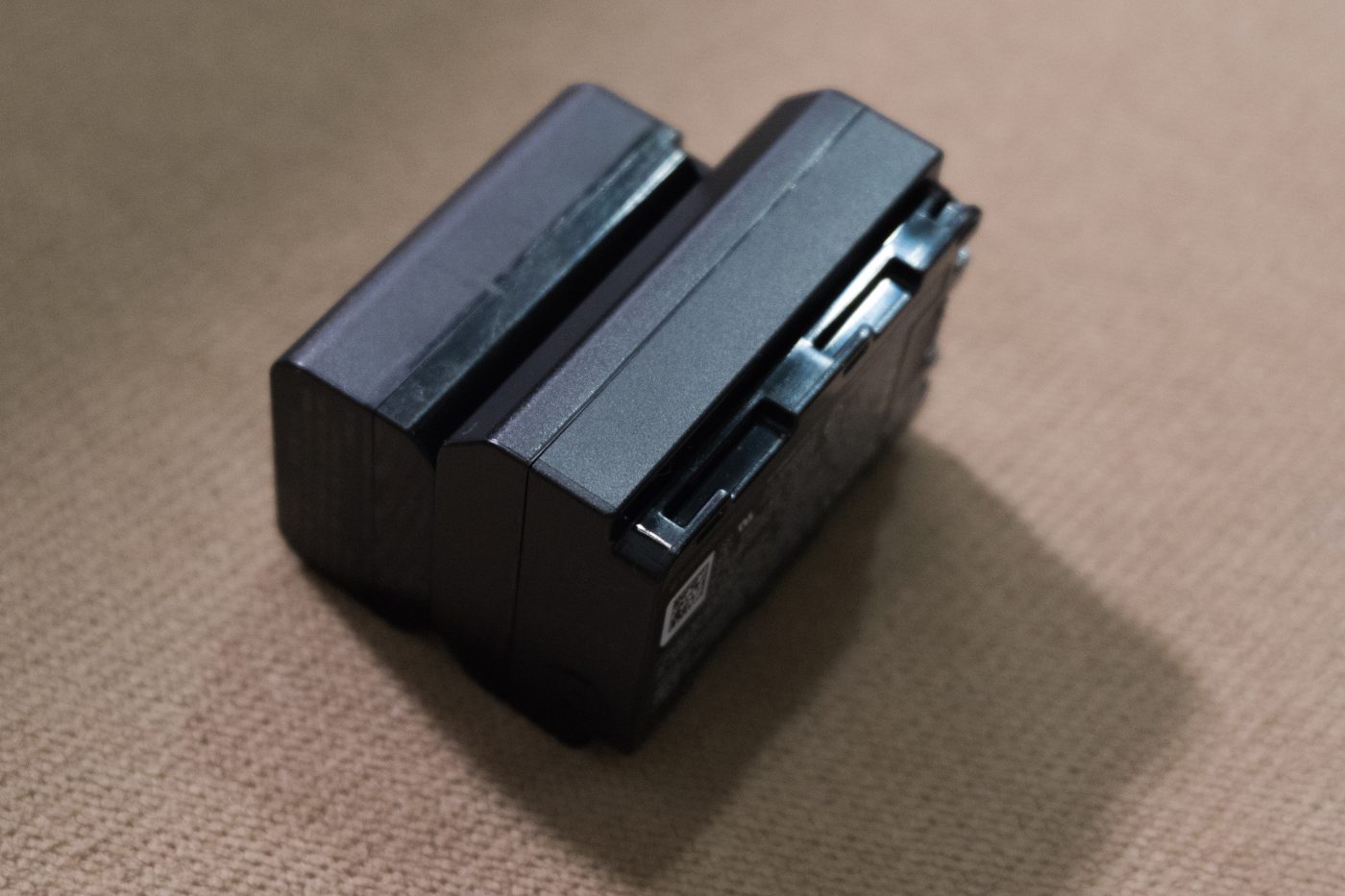
More on this topic is grouped under the NP-FW50 category, organised by capacity, ageing, runtime and spare-battery planning.
FAQ
Does the USB-C version hold more charge?
No. Both cells are 1100mAh at 7.4V; the USB-C version simply puts the charge port on the battery. If you want more runtime per cell, swapping versions will not do it — carrying a second pack will.
Will a battery case extend a shooting session?
Indirectly, because it makes carrying and recharging two or more packs easy. The case is not a power source for the camera. For genuine continuous power you need a DC coupler dummy battery attached to an external supply.
Can the three be mixed?
Yes. Standard and USB-C cells are both NP-FW50 form factor, so they fit the same bodies and both seat in a DR-FW50 case. Mixing lets you rotate during the day and charge everything together at night.
Is 1100mAh noticeably better than the original 1020mAh?
The quoted difference is about 80mAh, which is small. At 8.14Wh this is a modest cell by current standards; screen use, playback, flash and cold weather shape runtime far more than those few dozen mAh.