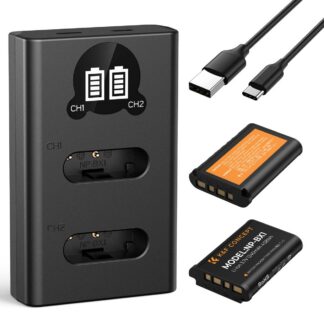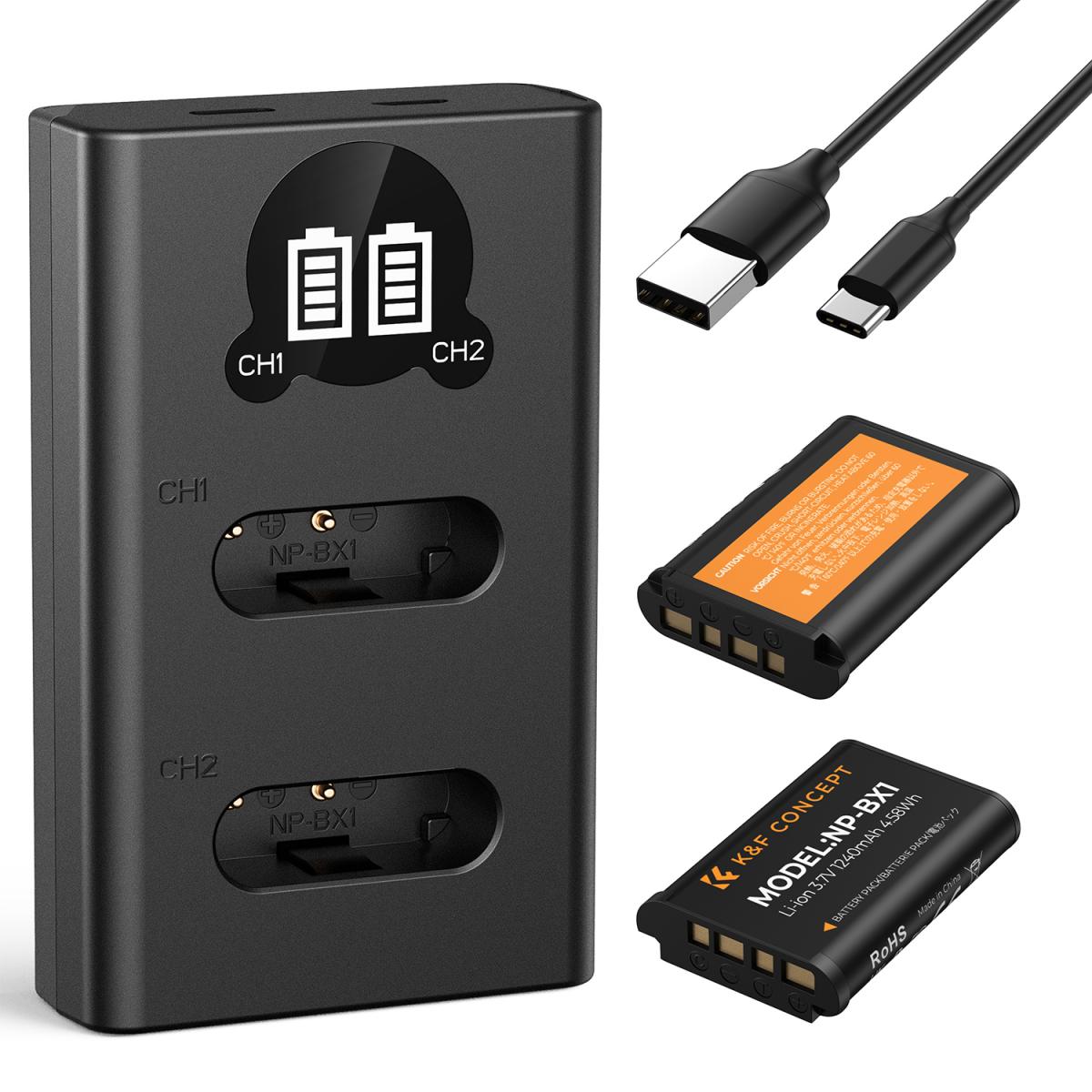
Short answer: the ZV-1 runs on a NP-BX1 — 3.7V, 1090mAh / 4.04Wh. Expect roughly 200–300 frames of street shooting and 40–60 minutes of continuous video. One spare covers light work, three for events, and external power for long takes.
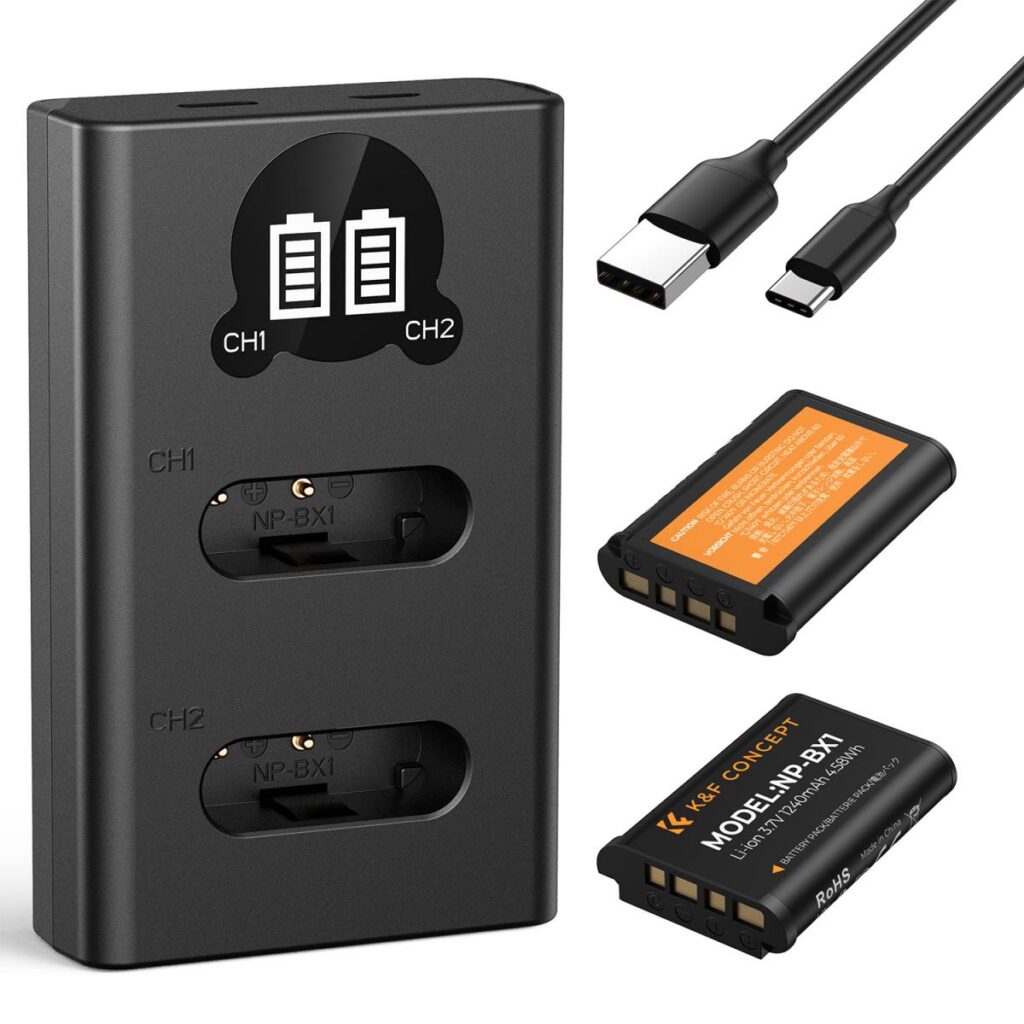
What the NP-BX1 actually is
| Spec | Value |
|---|---|
| Cell code | NP-BX1 |
| Voltage | 3.7V |
| Capacity | 1090mAh typical / 1060mAh rated |
| Energy | 4.04Wh / 3.93Wh |
| In-body charging | Check the manual; bodies with USB power can run while charging |
| Shared with | ZV-1 II / RX100 VII / RX100 III / ZV-1F / RX100 VI / RX100 V |
The ZV-1 sits in the ZV & Cinema Line line. This is a hybrid body, so runtime depends on whether the day is stop-start stills or long continuous work. We list 22 bodies on this format, so cells and chargers move between cameras.
Why the rated number looks smaller in real use
CIPA measures at 23°C with default brightness, one frame every 30 seconds, flash on every other frame and a power cycle every ten. Real shoots drain in four different places.
- Viewfinder versus screen A constantly live EVF draws more than the LCD, and ratings are usually quoted for the LCD.
- Brightness and refresh Maximum brightness outdoors plus high-rate display adds roughly twenty percent.
- Stabilisation and bursts IBIS stays energised and continuous shooting pins the sensor and processor.
- Wireless Wi-Fi, Bluetooth, FTP upload and phone tethering are silent drains.
In our use the ZV-1 lands at 200–300 frames on the street, a little lower at events, and 40–60 minutes of continuous recording — less with an external monitor, active stabilisation or high ambient temperature. These are working ranges, not manufacturer ratings.
How many cells to carry
| Shoot | One cell enough? | Carry | Note |
|---|---|---|---|
| Half-day street | Yes | 1 + power bank | Top up via USB on the way back, 30W PD or better |
| Full-day travel | No | 2 | Dual charger overnight, both full at breakfast |
| Wedding / event | No | 3–4 | Two in a pocket, swap in ten seconds |
| Talking head, locked off | Depends | 2 + external power | Long takes: dummy battery into a power bank |
| Long 4K / livestream | No | 2 + dummy | No thermal derating from a hot cell in the grip |
Will a third-party NP-BX1 work?
Yes, and in most situations you will not notice a difference. One criterion matters: does it have a decoding chip? A decoded pack talks to the body and the percentage counts down normally. An undecoded “bare cell” shows four bars and can cut out at two — exactly the behaviour you do not want mid-ceremony.
Two related questions: some firmware versions show a one-time “cannot guarantee battery performance” notice on power-up, which you confirm and keep shooting; and in-body USB charging usually works, but the speed depends on a PD-capable charger.
FAQ
What battery does the ZV-1 use?
The ZV-1 takes the NP-BX1 format — 3.7V, 1090mAh / 4.04Wh in our version. It matches the original dimensions and contacts, so it drops straight in.
How long does one NP-BX1 last?
About 200–300 frames of street shooting and 40–60 minutes of continuous video, depending on brightness, stabilisation, wireless and temperature. Bring three or more for anything you cannot interrupt.
Does a third-party battery void the warranty?
No. Batteries are consumables and a third-party pack does not affect the body warranty. Damage from a swollen or leaking cell is not covered, which is why unbranded bargain cells are a false economy.
What to buy
If you simply need a spare, a single NP-BX1 (1090mAh) is the cheapest way to fix it — the right format for this body at a fraction of the OEM price.
Shooting events regularly? Two cells plus a dual charger pay for themselves. The full NP-BX1 range puts single cells, kits and chargers on one page, so you can pick by how you travel.
Still own a ZV-1 II? It takes the same cell, so the ZV-1 II battery page applies to you too — accessories swap in both directions.