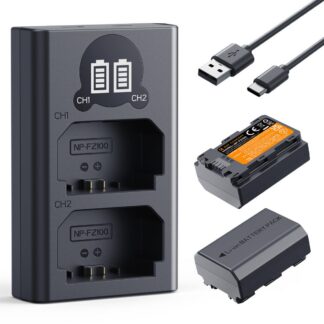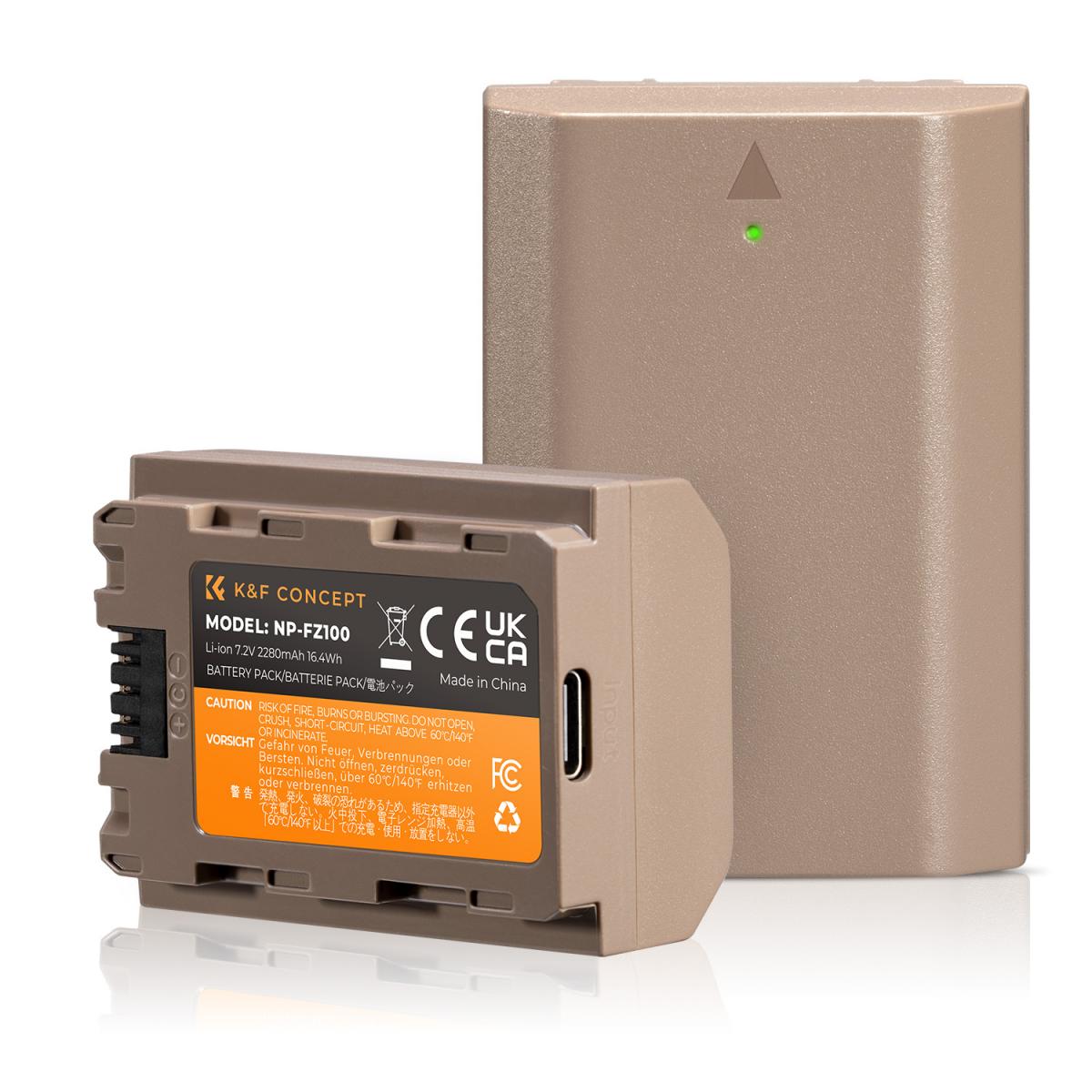
Short answer: the Sony a7 IV runs on an NP-FZ100 — 7.4V, 2600mAh / 19.24Wh in the high-capacity YO version, against 2280mAh / 16.4Wh for the OEM pack. Sony rates it at roughly 580 shots on the LCD, 520 through the viewfinder. Carry one spare for street work, three or four for a wedding, and budget about 90 minutes of 4K recording per cell.
What the NP-FZ100 actually is
The a7 IV arrived in late 2021: 33MP full frame, dual slots for CFexpress Type A and SD, a side-flip screen, 4K 60p. Its power system is inherited wholesale from the a7 III, which is good news if you already own that body — your cells carry over without an adapter.
| Spec | On the a7 IV |
|---|---|
| Cell code | NP-FZ100 (BC-QZ1 is Sony’s matching charger) |
| Voltage | 7.4V nominal (Sony prints 7.2V; same discharge window) |
| Capacity / energy | 2600mAh / 19.24Wh typical; 2400mAh / 17.76Wh rated |
| In-body charging | Yes, USB-C PD — and USB power while shooting |
| Shared with | a1, a9 series, a7 III / a7R III / a7R IV / a7R V / a7S III / a7C / a7C II, a6700, a6600, ZV-E1, FX3, FX30 |
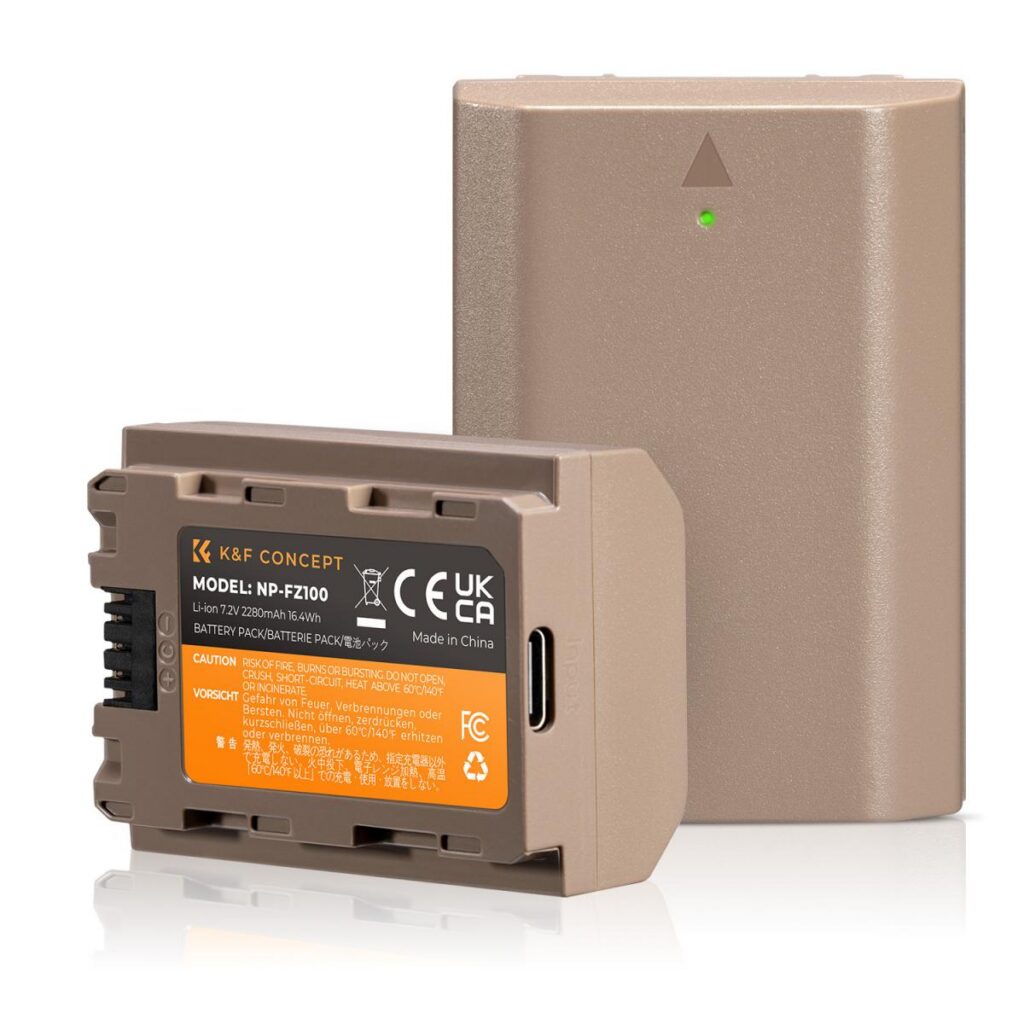
An OEM NP-FZ100 is 2280mAh / 16.4Wh. Third-party high-capacity packs land at 2400–2600mAh, about ten percent more on paper. Do not expect that percentage to convert one-to-one into frames: cell discharge curves and the protection board’s cutoff voltage decide the real number. Eight to twelve percent more shooting time is a realistic expectation, not twenty.
Why your 580-shot number looks like 300
CIPA measures under fixed conditions: 23°C, default screen brightness, one frame every 30 seconds, flash on every other frame, power cycled every ten. Real shoots drain in four different places.
- Viewfinder versus screen. A constantly live EVF draws more than the LCD — that is exactly why the rating drops from 580 to 520.
- Brightness and refresh. Max brightness outdoors plus high frame rate display adds roughly twenty percent.
- IBIS and bursts. Stabilisation stays energised, and continuous shooting keeps sensor readout and processor pinned. This is the one event shooters underestimate.
- Wireless. Wi-Fi, Bluetooth, FTP upload and phone tethering are all silent drains. Leaving Wi-Fi on after a shoot is the single fastest way to lose a bar.
For weddings and events — camera on, waiting for the moment — expect 60 to 75 percent of the CIPA figure, so 350 to 430 frames. Video is starker: about 90 minutes of continuous 4K 25p, less with IBIS on, an external monitor attached, or a hot afternoon.
How many cells to carry
| Shoot | One cell enough? | Carry | Note |
|---|---|---|---|
| Half-day street | Yes | 1 + power bank | Top up via USB-C on the way back; 30W PD or better |
| Full-day travel | No | 2 | Dual charger overnight, both cells full at breakfast |
| Wedding / event | No | 3–4 | Two in a pocket, swap in ten seconds |
| Talking head, locked off | Depends | 2 + dummy battery | Long takes: DR-FZ100 into a power bank |
| Long 4K / livestream | No | 2 + dummy | No thermal derating from a hot cell inside the body |
Will a third-party NP-FZ100 work?
Yes, and in most situations you will not notice a difference. There is one criterion that matters: does it have a decoding chip? A decoded pack talks to the body, the percentage counts down normally, and low-battery warnings behave. An undecoded “bare cell” shows only four bars on the a7 IV and can cut out at two — exactly the behaviour you do not want mid-ceremony.
Two related questions come up constantly. Firmware updates may produce a one-time “cannot guarantee battery performance” notice on power-up; confirm it and shooting continues. And in-body USB-C charging generally works with third-party cells, but the speed depends on the charger supporting PD — a plain 5V brick charges painfully slowly.
FAQ
Is the a7 IV battery the same as the a7 III?
Yes. Both use the NP-FZ100, so cells from an a7 III, a7R III or a7R IV fit the a7 IV and vice versa. Older cells will hold noticeably less than their rated capacity after years of cycling, so keep the newest pack on the main body.
How long can the a7 IV record 4K on one battery?
About 90 minutes of continuous 4K 25p, less with IBIS active, an external monitor, or high ambient temperature. For interviews and livestreams a dummy battery into a power bank removes the limit entirely.
Does a third-party battery void the camera warranty?
No. Batteries are consumables and using a third-party pack does not affect the body warranty. Damage caused by a swollen or leaking cell is not covered, which is why unbranded bargain cells are a false economy.
What to buy
If you simply need a spare, a single 2600mAh NP-FZ100 is the cheapest way to fix it — about ten percent more capacity than OEM at a fraction of the price.
Shooting events regularly? A two-cell kit plus a dual charger pays for itself: both cells full overnight, no fighting over the one socket in a hotel room. If you would rather leave the charger at home, the full NP-FZ100 range puts single cells, two-cell kits and chargers on one page.
Still own an a7 III or a7R III? Same cell, so the a7 III battery page applies to you too — accessories swap in both directions.