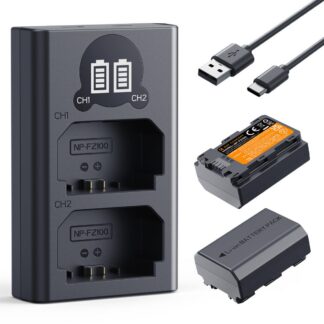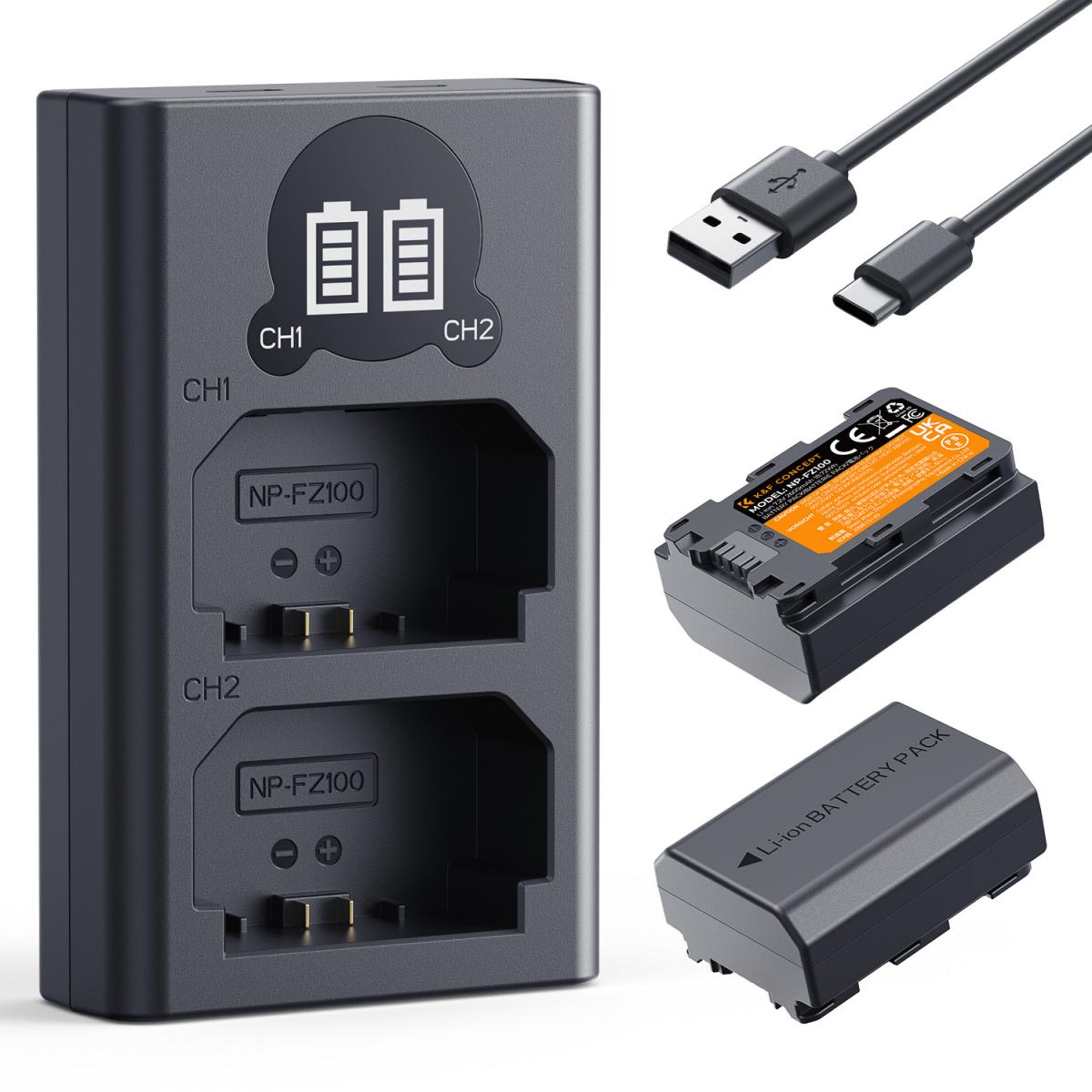
Short answer: one 2600mAh NP-FZ100 gives you roughly 400–500 frames of street shooting, 350–420 at a wedding, and 85–100 minutes of continuous 4K 25p. What actually decides your runtime is not the cell — it is screen brightness, stabilisation, wireless, and how long the camera sits switched on waiting.
Runtime by shoot type
These are working ranges from ordinary use, not lab figures. Temperature, lens stabilisation and shooting intensity will move them by ten to fifteen percent either way. Treat them as planning numbers.
| Shoot | One cell lasts | Main drain |
|---|---|---|
| Street (on for 10–20s, off between shots) | 400–500 frames / 3–4 hours | EVF, boot cycle |
| Travel (frequent review, on and off) | 350–450 frames / 2.5–3.5 hours | Review, brightness, Wi-Fi |
| Wedding / event (always on) | 350–420 frames / 2–3 hours | IBIS, bursts, AF-C |
| 4K 25p continuous | 85–100 minutes | Encoder, heat, screen |
| 1080p continuous | 120–140 minutes | Encoder, screen |
One thing gets overlooked: idling costs power. Mount a stabilised 70-200 and the OIS, AF and IBIS keep working between frames. Four hours on the floor of a venue with only 300 frames shot is a completely normal consumption pattern.
Five settings that buy back power
- Fix screen brightness at mid. Auto brightness pins to maximum outdoors; this alone saves ten to fifteen percent.
- Turn off high frame rate display. Standard refresh in the finder saves power with almost no cost to the focusing experience.
- Disable Wi-Fi and Bluetooth auto-connect. Forgetting to turn Wi-Fi off is the most common cause of a dead spare, especially with FTP enabled.
- Set power save to one minute. The a7 IV wakes in about 0.3 seconds, far cheaper than leaving the screen lit.
- Switch IBIS off when it is not earning its keep. On a tripod, or above 1/500s, it is pure waste.
Together these typically return 60 to 100 extra frames in a wedding — about a third of a battery, for free.
Charging beats buying
Most “battery problems” are really scheduling problems. The a7 IV charges over USB-C PD and runs on USB power while shooting, so with a 30W-or-better power bank you can top up in any gap.
| Method | Speed | When |
|---|---|---|
| In-body USB-C, PD 30W | About 2.5 hours to full | Lunch, car, hotel |
| In-body USB-C, plain 5V | Six hours or more | Not worth it |
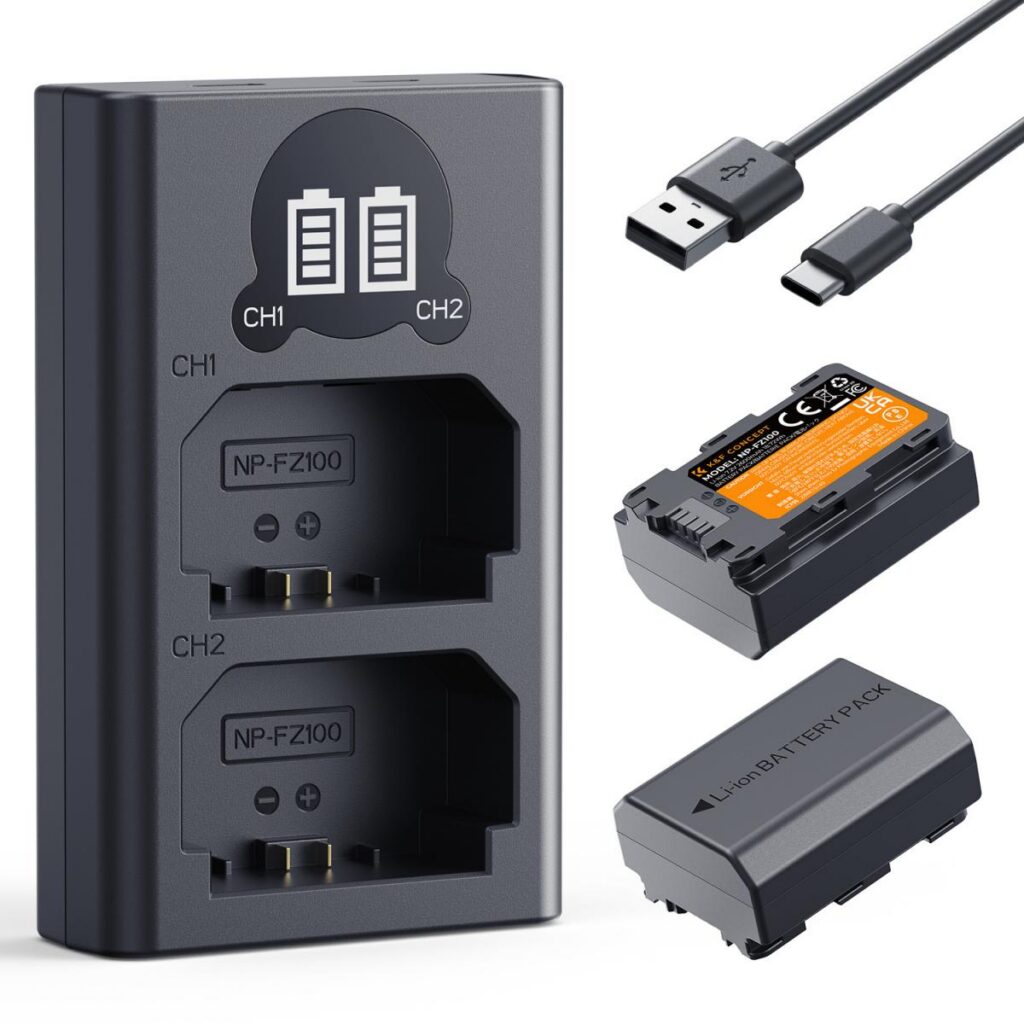
| Dedicated dual charger | Two cells in about 2 hours | Overnight, batch |
| Dummy battery + power bank | Unlimited while plugged in | Static setups, livestreams, long interviews |
The economical setup is two cells, one dual charger and a 65W power bank. Rotate during the day, top up in gaps, charge both overnight. It costs far less than four batteries and weighs less too.
When a dummy battery makes more sense
If the camera does not move — interviews, livestreams, conferences, timelapse — the DR-FZ100 dummy battery beats stacking cells. Power comes from an external bank, so a 20000mAh pack runs all day and the body never thermally derates from a hot cell in the grip.
The trade-off is cabling: you need to dress the cable, match the voltage spec, and it is awkward for handheld work. Sit-down shoots only.
FAQ
Can one a7 IV battery last a full day?
Light street shooting, yes. A full travel day or an event, no. Plan on two cells minimum and three to four for anything where you cannot miss a moment — a swap takes ten seconds and does not interrupt the shoot.
Does charging while shooting slow the a7 IV down?
No performance penalty, but you need PD 30W or higher to run the body and charge at once. On a plain 5V charger the percentage still falls, just more slowly.
How should I store batteries I am not using?
Keep them at 50–60 percent and top up every three to six months. Storing at full charge or fully flat accelerates ageing and shows up as obvious capacity loss after two years.
The setup we would buy
On a budget, get to three cells first: the 2600mAh NP-FZ100 is inexpensive enough that three plus a dual charger covers a full wedding or a three-day trip.
If your a7 IV is mostly a video body, start with two cells and a DR-FZ100 — external power for the locked-off takes, cells for handheld, which matches how a shooting day actually runs. Bodies like the a7C II take the same cell, so multi-body kits can share one battery pool.